Active-TV Ecosystem Developers,
The Issue: Bringing internet-delivered TV-web video to the living room TV requires mastering multiple engineering disciplines and marketing constraints.
Background: Microsoft offers an option for most, but not all, of the pieces needed to form a home entertainment ecosystem.
Behind the scene: Whereas Microsoft is pursuing a Vista-reinforcing digital media strategy, active-TV technology enables a large ecosystem of TVs, PCs and TV-web channels, by offering considerable openness and flexibility in terms of what devices will work well together within the networked ecosystem - including multiple PC operating systems.
A Microsoft supported blog by Chris Lanier, provides more information about Microsoft’s next generation Extender technology: “Microsoft launched there new MCX Partner Site for Pika the other day. Pika is the codename for Media Center Extenders (MCX) v2. “
Following the provided link to the Microsoft’s MCX web site reveals: “Windows Media Center Extender Technology (or "MCX Technology") is platform-independent software that will enable home network connected consumer electronics devices to deliver full, high-definition Media Center experiences.”
Those of you who have been tracking digital media convergence for some time likely remember the first Microsoft Extender device, including its strengths and weaknesses when it was introduced to the market some years ago. Extender technology, now in its second generation (v2) and codenamed Pika, has some similarities, yet important differences, with active-TV technology. Both require the assistance of a networked PC to complete the processing of a TV-web channel; both claim platform-independence for the firmware portion, the portion integrated into the Set-Top Box (STB), TV, or DMA (Digital Media Adapter). It is the significant differences, however, that I will now outline.
First, to what extent is Pika being adopted in the market versus alternative solutions? Recent news from Beijing regarding collaboration between Microsoft and a Chinese TV maker may indicate that the later is considering the use of Pika: "The project focuses on in-home network digital entertainment - how to connect PCs, TVs and the Internet to provide this digital entertainment experience". To be sure, Microsoft Extender technology can be integrated into a TV or STB, but it is noteworthy that so far no European or US developer has introduced such a product. However, there have been announcements from several US and European developers regarding their adding active-TV technology.
The first Media Center Extender device would only operate fully when networked with a Media Center PC, rather than a PC using Windows XP. The Xbox also supports Extender technology but offers reduced functionality when networked with a Windows XP PC. If Extender-enhanced devices were popular they would help drive adoption of the newest premium PC operating systems. However, reduced functionality is not very satisfactory for existing Windows XP users or TV manufacturers that want to sell a networked TV which will work with XP – there are over 100 million licensed XP users. With Pika technology aligned with Vista-based PCs (a small but growing user base) and not the massive Windows XP installed base, the reduced Extender functionality provided to the XP user, may have limited appeal. Of note, Apple-TV (another DMA variant) also operates with a companion networked PC (know as an Extended-PC), but is not ‘keyed’ to a particular version of the Windows operating systems (OS).
In contrast, active-TV technology does not place any restrictions on the version of Windows used by a PC supporting the operation of the networked TV or STB. For this reason, it is easy to see the appeal this flexibility has for the networked TV manufacturer; it allows them to sell a networked TV which accesses internet-delivered TV-web channels to any existing PC owner – not just a subset of new PC owners.
Active-TV technology is also able to support far more TV-web channels than currently accessible through Extender-enabled DMAs. This is because there are lots of ways to build a PC-web page, and equally, many different ways to build a TV-web channel. However the TV-web channels promoted with the Media Center PC, originally known as spotlights, made use of the Windows Media Video (WMV) codec. It is important to underscore that the Extender platforms do not have support for important video codecs such as the popular Adobe Flash (FLV) – however, here is supported for MPEG2.
As a result, a TV-web channel which uses the FLV video codec, such as the recently described YouTube TV-web channel, can not be displayed on an Extender. Adobe Flash Video is likely the most popular video codec in use by video-sharing PC-web sites. Given that a TV-web channel can draw upon the same video database used by the PC-web site, it is much more convenient to use FLV for a TV-web formatted alternative. Active-TV technology works with any video codec and is very flexible in its support for differently formatted TV-web channels.
Microsoft has introduced MCML and WinFX formatting (Media Center Markup Language and WinFX browser apps) for future TV-web channels. Should a TV-web channel developer chose to use these formatting methods they will only be accessible to Extender platforms which have the necessary underlying support – will this mean only a Pika-enabled DMA and a Vista PC? So far, unless an Extender is connected to a PC using the latest version of Windows, there is reduced functionality, such as only supporting basic DLNA operation when used with Windows XP (no TV-web channel access). Slide 4 of Microsoft's WinHec06 presentation indicates that only Vista Premium or Ultimate will support complete Extender functionality. Earlier Windows users can not expect support for “3rd party applications”, which is Microsoft-speak for no TV-web channel access.
Of course, TV-web channel developers may continue to use HTML, Adobe flash and other formatting methods supported by the legacy of browsers used with older PC operating systems. This will likely give them access to the greatest audience, particularly when delivered to the living room TV via active-TV technology.
Lanier’s blog states that Sigma Designs will provide the chip used in the Pika-based Extender v2. ATI provided the chip for the Extender v1. Likely critical to Microsoft’s decision is chip-support for the VC-1 (WMV9) codec. An alternative chip supplier would have been STMicroelectronics – using their ST710x family. Not surprisingly, active-TV technology developers such as Avtrex , Futarque and others, already offer support for Sigma Designs and ST-Micro based TVs and STBs – they also support ATI-based active-TV systems. ATI is a major supplier of chips for the US digital TV market. ST-Micro is major supplier of chips to world-wide TV and Set-Top Box developers. Not to be left out is NXP-based STB developer TeleGent which has also indicated the importance of active-TV technology support. Note that several other STB and TV developers are listed on AMD’s active-TV support page, including: Wyplay, WorldSat, Dream Multimedia and more. Active-TV technology is not owned by any one company, but AMD has been a noticeable user of the technology.
Returning to the recent Beijing news regarding the use of Microsoft technology by a Chinese TV maker, it is not surprising given the developments of leading US and European manufacturers, that their counterparts in China are also evaluating active-TV technology.
Feedback, corrections and comments welcome. Contact me for more information or support with active-TV technology development.
Daniel Mann
Active-TV Technology for iPhone and iPod touch

Navigate YouTube
active-TV technology for PC

Windows PC based home network
Wednesday, June 27, 2007

Saturday, June 16, 2007
Growth of TV-web channels
Active-TV Ecosystem Developers,
The Issue: How many TV-web channels are available for TV viewing? What standard do they use?
Background: The freedom associated with a PC’s access to PC-web via the internet, has changed our lives. This same freedom will enable TV-web channel developers to bring TV-web to the living room TV
Behind the scene: Anyone can build a TV-web channel, and many major companies already have. With active-TV technology, the growth in TV-web channel development is accelerated, given that it brings to TV-web the same freedoms associated with PC-web access.
I don’t know how many PC-web sites exist, or how many new ones are added to the web every day. Similarly, I don’t know how many TV-web channels [i.e. websites formatted for access at the TV] exist. But like the early days of PC-web, while the number may be relatively low, it is growing rapidly.
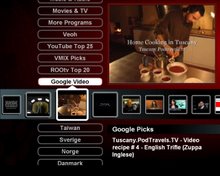
I have attached below a list of known TV-web channels or sites. However, such a list quickly falls out of date. I did not include sites from the USA which would have included some interesting examples, such as access to YouTube, Google Video, Veoh, Vmix and more. Also not included are sites from Japan, Korea or Taiwan, whose listings’ would have required additional font support.
As previously described, there are many ways to build or lay out TV-web. When Microsoft introduced the Media Center Edition (MCE) PC, it offered a suggested set of guidelines to show how TV-web, intended for MCE presentation, should look. Although there may be practical reasons for following these guidelines, a TV-web developer can nevertheless build anything they see fit, using any web publishing tools available.
The MCE PC has a means of adding “more programs” to the TV-web channel listings. The name “more-programs” may not be ideal; it is likely left over from the time when TV-web was also known as media applications. Any TV-web channel can be added under the “more programs” channel listings. However, Microsoft selected certain TV-web sites to reside at the top of the TV menu and called them “spotlights”. TV-web channels added to the TV menu via use of “more programs” appear lower down on the TV menu. With the introduction of Vista, Microsoft has instead been calling TV-web channels “on-line media,” rather than MCE “more programs” or “spotlights”.
Like PC-web, once a TV-web channel is offered on the internet, anyone with a capable browser can access it. Using active-TV technology enables any Windows PC to access the site on behalf of a networked TV or Set-Top Box -- there is no need for an MCE PC. A number of TV-web channel suppliers are trying to restrict access to their site to certain geographical locations – such as, for example, the BBC limiting access to the UK. This is generally accomplished via IP address filtering: If the viewer’s IP address is not determined to be located in the correct geographical region, the request for access to the TV-web channel is not granted by the server.
Because Adobe Flash Video (FLV) is very popular with PC-web sites supporting video sharing, it is increasingly used with TV-web channels. Use of FLV was not covered in the MCE TV-web development guidelines. Current active-TV technology supports the distribution of TV-web channels using FLV to devices such as networked TVs and networked STBs located around the home. However, other devices with similar technology, including Media Center Extenders, do not support the use of FLV video. Where these Extenders are similar to active-TV technology is in their support for Windows Media Video (WMV) and MPEG2 video.
Feedback, corrections and comments welcome.
Daniel Mann
link to list of non-US TV-web channels
Thursday, June 7, 2007
Will YouTube access justify cost of Apple TV ?
Active-TV Ecosystem Developers,
The Issue: Apple TV unit volumes are lower than some had expected.
Background: Building a low-cost living room appliance which enables internet video access, remains a challenge. This continues to be the big obstacle preventing many companies expanding into living room video delivery.
Behind the scene: active-TV technology enables low-cost access to internet video in the living room, via enlisting behind-the-scenes support from a networked PC or laptop computer.
In a CNNMoneny.com article, Brent Schlender of Fortune argues that Apple TV is a “dud”. No unit shipment numbers are presented but the lack of promotional advertising is sited as indication of its unacceptability.
Listed as key weaknesses are:
A review of Apple-TV, comparing it with active-TV technology, in September 2006, entitled “Apple Takes the Extended-Path”, predicted many of the problems outlined by Schlender’s article. In view of these limitations, it can be assumed that Apple knew support for only widescreen high-def TVs would be limiting and their shipment numbers may consequently be inline with their initial expectations. What is needed to produce greater unit shipments, however, is a lower cost Apple TV and support for popular video - such as a YouTube channel.
Last week at the D conference, Steve Jobs announced that Apple TV would soon include support for YouTube viewing. It was stated that the TV UI will be “embedded into the AppleTV interface”. Also, TV access to YouTube “works off a live Internet connection that does not have to go through the PC”.
Apple TV’s ability to access YouTube video without the aid of a PC, is partly why the device is so expensive. Clearly the inclusion of a DVD player would make Apple TV more attractive, but this would add further cost to an already expensive appliance. I am sure Apple understands all the tradeoffs, but so far has chosen the more expensive path of a device with greater standalone capability.
A BusinessWeek article “What Apple TV costs to Make” by Arik Hesseldahl, estimates a bill-of-materials (BOM) of $237. This results in an untypical low profit margin for an Apple product. The Intel CPU and chipset are estimated at $68. Hesseldahl states “by typical Apple standards, the new set-top video box may as well be a hobby given how unprofitable it is in its current form”.
Long-term analyzers and developers of platforms bringing internet TV to the living room are familiar with the tradeoffs Apple TV faced. In short, it is difficult to build a reliable, low-maintenance and inexpensive box that that can enable flexible and polished access to internet video. Yes, the PC achieves this, but it has little acceptance as a device attached to the living room TV. Microsoft faced the same set of tradeoffs when it architected the Media Center Extender.
There is plenty of interesting video available from YouTube, Veoh, Vmix and many more. What the market needs is an acceptable low-cost hardware platform brining internet video to the living room TV. With over 100M shipments of Sony Playstation 2 (PS2) and a current price of about $130, BroadQ’s active-TV software for the PS2 is likely well positioned to challenge the market for DMA-styled devices – such as Apple TV. Fortunately, the PS2 also plays DVDs and games.
The active-TV technology approach results in very low additional cost at the TV side. This is particular true when active-TV technology is built directly into a networked TV. This is achieved by relying on a networked PC ‘invisibly’ doing all the “heavy lifting” work. The approach produces a different set of tradeoffs for the home user. For those that already own a networked PC or laptop computer, it is likely the least expensive way of bringing YouTube and other internet distributed video to the living room TV. Developers of traditional Set-Top Boxes, now working on enhancements such as network connectivity, or TVs with network connectivity, are using active-TV technology to enable internet video access with very little increase to the TV’s bill-of-materials.
The embedded Apple TV UI for YouTube will likely be of typical Apple quality. With active-TV technology it is easy for anyone to design and build their own YouTube TV interface. Active-TV technology developer MediaMall has recently updated its TV UI for YouTube. See image below.

Similar to early reports describing the Apple TV version, it uses IR remote Triple-Tap Entry to enter text strings when searching for new videos. This will likely be very popular. I also like the alternatively supported approach of selecting favorites from the YouTube PC UI, which then appear in the listings to the left of the screen. This can be done while using a wireless laptop PC in the living room along with a big screen TV showing the YouTube TV UI via active-TV technology support.
Apple TV problems such as the inability to access photos from more than a single networked computer are likely easily fixed. Existing active-TV alternatives already support this feature. The debate over what is appropriate for a TV UI (TV-web) and what should be left to the PC UI (PC-web) will continue, but I don't see keyboards making their way into living room for TV support. Apple is skilled at making these judgments, but the openness of active-TV technology allows anyone to offer their own solution, if they could just figure out what TV-UI users really want. Active-TV technology also works with standard-def or high-def Set-Top Boxes and TVs.
Feedback, corrections and comments welcome.
Daniel Mann
The Issue: Apple TV unit volumes are lower than some had expected.
Background: Building a low-cost living room appliance which enables internet video access, remains a challenge. This continues to be the big obstacle preventing many companies expanding into living room video delivery.
Behind the scene: active-TV technology enables low-cost access to internet video in the living room, via enlisting behind-the-scenes support from a networked PC or laptop computer.
In a CNNMoneny.com article, Brent Schlender of Fortune argues that Apple TV is a “dud”. No unit shipment numbers are presented but the lack of promotional advertising is sited as indication of its unacceptability.
Listed as key weaknesses are:
- the requirement for an HDTV connection
- high price ($299)
- inability to order movies from the TV UI
- lack of DVD
- access to photos from only a single networked computer
A review of Apple-TV, comparing it with active-TV technology, in September 2006, entitled “Apple Takes the Extended-Path”, predicted many of the problems outlined by Schlender’s article. In view of these limitations, it can be assumed that Apple knew support for only widescreen high-def TVs would be limiting and their shipment numbers may consequently be inline with their initial expectations. What is needed to produce greater unit shipments, however, is a lower cost Apple TV and support for popular video - such as a YouTube channel.
Last week at the D conference, Steve Jobs announced that Apple TV would soon include support for YouTube viewing. It was stated that the TV UI will be “embedded into the AppleTV interface”. Also, TV access to YouTube “works off a live Internet connection that does not have to go through the PC”.
Apple TV’s ability to access YouTube video without the aid of a PC, is partly why the device is so expensive. Clearly the inclusion of a DVD player would make Apple TV more attractive, but this would add further cost to an already expensive appliance. I am sure Apple understands all the tradeoffs, but so far has chosen the more expensive path of a device with greater standalone capability.
A BusinessWeek article “What Apple TV costs to Make” by Arik Hesseldahl, estimates a bill-of-materials (BOM) of $237. This results in an untypical low profit margin for an Apple product. The Intel CPU and chipset are estimated at $68. Hesseldahl states “by typical Apple standards, the new set-top video box may as well be a hobby given how unprofitable it is in its current form”.
Long-term analyzers and developers of platforms bringing internet TV to the living room are familiar with the tradeoffs Apple TV faced. In short, it is difficult to build a reliable, low-maintenance and inexpensive box that that can enable flexible and polished access to internet video. Yes, the PC achieves this, but it has little acceptance as a device attached to the living room TV. Microsoft faced the same set of tradeoffs when it architected the Media Center Extender.
There is plenty of interesting video available from YouTube, Veoh, Vmix and many more. What the market needs is an acceptable low-cost hardware platform brining internet video to the living room TV. With over 100M shipments of Sony Playstation 2 (PS2) and a current price of about $130, BroadQ’s active-TV software for the PS2 is likely well positioned to challenge the market for DMA-styled devices – such as Apple TV. Fortunately, the PS2 also plays DVDs and games.
The active-TV technology approach results in very low additional cost at the TV side. This is particular true when active-TV technology is built directly into a networked TV. This is achieved by relying on a networked PC ‘invisibly’ doing all the “heavy lifting” work. The approach produces a different set of tradeoffs for the home user. For those that already own a networked PC or laptop computer, it is likely the least expensive way of bringing YouTube and other internet distributed video to the living room TV. Developers of traditional Set-Top Boxes, now working on enhancements such as network connectivity, or TVs with network connectivity, are using active-TV technology to enable internet video access with very little increase to the TV’s bill-of-materials.
The embedded Apple TV UI for YouTube will likely be of typical Apple quality. With active-TV technology it is easy for anyone to design and build their own YouTube TV interface. Active-TV technology developer MediaMall has recently updated its TV UI for YouTube. See image below.

Similar to early reports describing the Apple TV version, it uses IR remote Triple-Tap Entry to enter text strings when searching for new videos. This will likely be very popular. I also like the alternatively supported approach of selecting favorites from the YouTube PC UI, which then appear in the listings to the left of the screen. This can be done while using a wireless laptop PC in the living room along with a big screen TV showing the YouTube TV UI via active-TV technology support.
Apple TV problems such as the inability to access photos from more than a single networked computer are likely easily fixed. Existing active-TV alternatives already support this feature. The debate over what is appropriate for a TV UI (TV-web) and what should be left to the PC UI (PC-web) will continue, but I don't see keyboards making their way into living room for TV support. Apple is skilled at making these judgments, but the openness of active-TV technology allows anyone to offer their own solution, if they could just figure out what TV-UI users really want. Active-TV technology also works with standard-def or high-def Set-Top Boxes and TVs.
Feedback, corrections and comments welcome.
Daniel Mann
Wednesday, May 23, 2007
An alternative to "please use my portal"
Active-TV Ecosystem Developers,
The Issue: Ambitions strategies to secure a key or exclusive role in the delivery of internet video are still the game for many.
Background: Some experienced companies are seeing collaboration is the better way to reach an audience.
Behind the Scenes: Active-TV technology is the glue enabling collaboration between video distributors and living-room hardware (e.g. TV) developers.
A Wall Street Journal article states that several major TV industry companies are “betting that they can build their own Internet video portals”. However, CBS plans to revise its Innertube portal strategy, with the use of widespread syndication rather than a single portal. After a year experimenting with a portal approach, CBS has concluded “forcing consumers to come to one site -- its own -- to view video hasn't worked.”
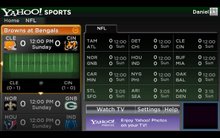
Access to video portals is mostly accomplished with a PC using broadband service. The accompanying UI is typically formatted for PC usage, assuming a keyboard and mouse will drive the UI. Many portals are not accessed via the PC browser, but via a “player” (PC software built specifically for accessing the portal). In some cases, such as Yahoo Go for TV, UIs have been formatted for the TV; But since the approach requires a PC to be attached to the living room TV, there are few users.
CBS is reported to have “abandoned attempts to build its own blockbuster portal”, but it has signed deals with smaller video distribution companies like Veoh. This enables a path for CBS video to reach the living room TV, as Veoh as well as supporting PC-web formatting, has a TV-web formatted option.
I suggest the scramble to secure a significant role in the delivery of internet video to TVs around the home, has produced overly ambitions strategies. Different companies are hoping to have the one portal that matters or the one TV UI that everyone uses or the one TV advertising delivery mechanism that has the numbers. Maybe the MBAs in these companies are required to promote exclusive ideas in order to support their projection of business growth. But without a widely accepted rout to the TV in use, there is no clear yardstick to measure ambitions proposals.
Participation in the scramble is particularly difficult because most companies don’t build or market the necessary hardware needed to deliver video to the TV. Without this piece of the puzzle it is hard to control the outcome. This likely contributed to Apple introducing its Apple TV platform, enabling the user to access the Apple portal.
Most companies are not able to make the deals needed to extend their strategy to include delivery of video to a large number of TV or Set-Top Box (STB) in living rooms. If the manufacturer or supplier of a networked STB constrains its access to a preferred portal, it may not meet with user approval. Each TV viewer may want to exert his or her own choice. This conundrum adds an amount of irony to the scramble.
The introduction of networked STBs supporting the popular DVB-t transmission brings a solution to the European market. These STBs are bought at retail, and there is little business pressure to constrain them to a single portal. They are popular due to the uptake of free-to-air digital broadcast TV. Using active-TV technology with a DVB-t STB, the buyer is free to access any TV-web formatted channel. Technically speaking, a similar approach using free-to-air ATSC, or cablecard, and active-TV technology could be used in the US market. Such boxes are available from Avtrex and others, but US STB users expect the box to be provided by a cable TV service, and do not buy a STB in retail. This is why US reports often speak of the networked game console leading the uptake of internet video delivery to the living room TV.
Just as PC-web pages that are only accessible by one type of PC browser would meet will little web user approval, producing a TV-web channel which can only be viewed through a single player or unique hardware, will reach a reduced TV audience. This may ultimately determine the lesson to be learned by developers of video portals and eliminate the cry "please use my portal". The home user wants the freedom to select their internet video source and be assured it will always be viewable via the hardware and TV in their living room.
Active-TV technology provides TV-web with the same universal access and opportunity available to PC with PC-web. It is the glue for collaboration. It enables the video distributors to be confident their channel will operate with living room hardware. It provides the independent hardware developer with video to demonstrate their product in action.
Feedback, corrections and comments welcome. Contact me for more information or support with active-TV technology development.
Daniel Mann
Tuesday, May 22, 2007
crossing the divide
Active-TV Ecosystem Developers,
The Issue: Early growth of internet video delivery has concentrated on PC users, but this is expected to expand to include TV viewers.
Background: The networked game console and Apple TV-like boxes, will initially bridge the internet to the TV.
Behind the Scenes: Active-TV technology is used to support more than internet video streaming. It allows a TV UI to be delivered over the internet to the TV without adding significant complexity or cost to the TV-side hardware.
A report by ABI Research agrees with other observers that online video is currently viewed at the PC, but “the ultimate destination for much of this content will be the TV”. They estimate that $1.5B in service revenue will be generated from networked delivered video-to-TV by 2012.
An outline of the report indicates that they expect platforms form Apple, Netgear, Sony and the like, to “bridge” to the TV and “cross [the] divide” that separates the PC and TV. The networked game console is expected to lead the way for video delivery.
Currently, a reported 24% of video downloads to the PC are transferred to DVD and then watched on a TV via a DVD player or game console. The DVD-burn and walk-net process is completely eliminated with a networked game console or networked Set-Top Box.
The sale of over 100M Sony Playstation 2 game consoles, which for now continue to outsell the Xbox 360 and PS3, makes them a leading candidate for early adopters. There are estimates of about 10M PS2 already installed in US home networks – to support network gaming. Using active-TV technology software from BroadQ, the need to burn a DVD is eliminated. BroadQ's software is installed in the PS2 just like any game disk. But when running, the TV attached to the networked PS2 can access video, photos, music and more from any PC in the home network. Further, it can reach across a broadband connection to access TV-web channels.
In addition to the installed base, the low cost of the PS2 will pressure the Digital Media Adapter (DMA) alternatives, such as the Apple TV. Suppliers of networking technology may find a niche in the DMA segment by integrating their wireless networking technology. Ultimately, the TV will be network enabled with active-TV technology integrated directly into the TV. Certain TV OEM’s are currently working on such projects, which is expected to add further value to the TV and benefit the home user.
Feedback, corrections and comments welcome. Please Contact me for more information or support with active-TV technology development.
Daniel Mann
Friday, May 18, 2007
Demand for internet access at the TV
Active-TV Ecosystem Developers,
The Issue: PC users have experienced internet video, now they want it on the TV.
Background: The living room PC has limited acceptance, but networked TVs and networked STBs are emerging to accomplish the task.
Behind the Scenes: Active-TV technology and TV-web formatting solve the technical and cost constraints in enabling living room TV access to internet video.
In the New York Times article Internet Meets Large Screen, personal efforts to converge the internet and the TV are described. The biggest obstacle remains “finding the right hardware”. This refers to finding a living room appliance which does not have the cost, heat, noise and maintenance requirements of a PC connected to the TV; But allows viewing of internet delivered video. This problem is solved with networked TVs and networked Set-Top Boxes (STB) supporting active-TV technology.
The article goes on to say “the standard graphical desktop interface is hard for couch dwellers to use” – referring to PC-web pages not being suited to TV viewing. This is solved with TV-web formatting. TV-web is normally formatted with large fonts – if any text is required – and does not require a keyboard or mouse. Correct TV-web formatting eliminates the reported “constant challenge” of “juggling computer settings to make fonts readable”.
The benefits of Hewlett-Packard’s networked TV approach, MediaSmart TV, are described as enabling access to PC video “without bringing the pain of the PC into the living room”. However, MediaSmart TV like, Apple TV, do not support completely “open” access to TV-web formatted channels. Apple TV enables access to video from Apple’s web site or Apple portal.
Steve Perlman is quoted in reference to the emergence of a suitable TV-web format, “when that happens, you’ll see an utter transformation of the business”. Well it is starting, and active-TV technology is enabling TV-web to reach living room TVs via home networking. I don’t think at all that “broadcast stations will all turn off”. They will likely use the same technology to support and build audience interest in popular broadcast shows.
Feedback, corrections and comments welcome.
Daniel Mann
Subscribe to:
Posts (Atom)