Active-TV Technology for iPhone and iPod touch

Active-TV Technology for iPhone and iPod touch
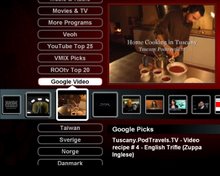
Navigate YouTube

Navigate YouTube available at iTunes App Sore

An easy to use iPhone and iPod touch App that enables both new and advanced YouTube users to get the best from YouTube.

Browse video Standard Feeds, Categories, Channels and Playlists. Then organize new videos into your own favorites and playlists. Make playlists private or public. Subscribe to other user's playlists and video collections for future viewing. Subscribe to videos matching search-words.

Look at publicly viewable favorite videos, playlists and subscriptions based on your YouTube friends, family and contacts. Send and receive video links with YouTube contacts via YouTube video messages.

Search for new videos tagged for your language or geographical region, using local keyboard. Explore for new videos via easy switching of user ID to the owner of interesting videos - then explore their world.

All actions are kept in sync with PC, Mac or Apple-TV access to YouTube. Available at Apple App Store.

active-TV technology for PC

active-TV technology for PC
Windows PC based home network
Showing posts with label Playstation. Show all posts

Wednesday, August 27, 2008

x86 software for the living room TV

The Issue: Intel revealed more details at IDF about its TV chip based on an integrated x86 CPU, which lowers the barriers for networked TVs utilizing PC-like software

Behind the scene: I expect many high-end TV developers to closely consider the new Intel TV chip. Has any lack of clear leadership or innovation from the traditional TV chip suppliers left them vulnerable to market share loss? Or do they know something about the home TV user that new entrants have yet to grasp?

Solution: There are many competing technical and business approaches in support of digital convergence for the TV. Introducing a cost-effective Intel TV chip is clearly some kind of milestone. However, given Intel’s experience with Viiv, it should be aware that there are still critical and necessary development steps ahead: developing infrastructure, partners, and customers, and most importantly communicating the value to end users – these remain paramount and time-consuming steps to be undertaken.

Intel provided more information last week at the San Francisco Intel Developer Form (IDF) about their efforts to bring the software advantages of the x86 architecture to the living room TV. Prior approaches branded as ViiV had little success and partially relied on Microsoft Media Center technology. The new approach is very different and based on incorporating an x86 ‘Pentium M’ processor into a TV System-on-a Chip (SoC).

The x86 CPU architecture has a software advantage because of its use in the PC. This has lead to a long history of extensive and complex software being developed for the PC, which is frequently not made available (“re-targeted” as the technical types say…) for other CPU architectures. A good example of this is Adobe’s Flash, that essential plug-in to the PC browser. For non x86 CPU-based devices, Flash is either not available or available several generations removed from the current offering.

As digital convergence proceeds, consumer appliances are required to support software applications, which have thus far been the domain of the PC. It has proven difficult for traditional TV SoC suppliers, who do not rely on an x86 CPU core, to develop software to enable a TV to perform PC-like tasks, such as web browsing.

Intel documentation provides a block diagram of their CE3100 TV SoC family. Coupled with “aggressive” pricing, Intel is on course to have a significant influence on the initially high-end TV and Set Top Box (STB) markets. Using the CE3100 family, devices such as the Apple TV, which currently uses a PC-like architecture, can carry a lower hardware component cost. In fact, the CE3100’s support for processing a broadcast digital Transport Stream (TS) enables support for features currently beyond Apple TV.


As well as building a new range of TV chips, Intel will provide much of the software infrastructure supporting a CE3100-based networked TV. For this, they have to combine networking and web processing software with traditional TV software (what the engineers call dual software stack operation). Intel press releases indicate that they have worked with Futarque on this task. Interestingly, Futarque also collaborated with AMD on active-TV technology STBs.

No matter how enthusiastic technologists and business analysts are about the potential of TV convergence, it s is not clear how much technology the TV user really wants. Maybe a 3D UI with Flash animation is not desired by many? Maybe something much simpler, such as the very successful MHEG5 deployment in Europe, will continue to satisfy most TV users? That said, MHEG5 may not be left behind: there are companies working to add Ethernet and social network support for simpler MHEG5 TVs. If the CE3100-derived TV remains open (like the PC browser, for example) then it will gain the attention of many software developers, who will experiment and find hybrid software combinations that meet with TV user approval. However, if TV OEMs close their TVs -- like the Apple TV -- to “monetize” all convergence features, then the uptake will be much slower.

Increasingly, efforts such as MHP, OCAP or tru2way appear dated before they even have their day-of-success in the market. Their inability to deliver acceptable software solutions has left the market open to the CE3100, which draws upon software with a proven PC history.

Both the Intel Viiv and AMD Live!-branded projects, promoted as supporting digital convergence, met with little success. Interestingly, as Intel finds a new way forward via an x86 based TV SoC, AMD announces it will sell to Broadcom the TV SoC business it acquired with the ATI merger. AMD’s analysis of digital convergence would appear quite different from Intel’s

Technically Speaking
Requests by the networked TV to access an Internet webpage or widget are sent to the home router; and then on via the router’s broadband connection to the webpage or widget server. A TV must process the webpage or widget when it arrives. This requires complex software, which has traditionally been incorporated into the PC’s browser. A TV based on the Intel CE3100 has an advantage when stepping-up to perform these complex software tasks.

The active-TV technology approach relies on the router handing off much of the software task to a proxy in the form of a networked home PC: It enables a TV SoC not equipped with an x86 processor to access a PC’s software processing advantage. The TV’s request is first processed by the PC assisting the TV, and then simplified data is sent by the PC proxy to the TV for display. Some TV developers may prefer this approach as it reduces the prospect of TV obsolesce. The TV “borrows” the PC’s browser in support of its Internet access. This reduces the task of maintaining the TV’s browser software. TV purchasers expect a 10 or greater-year lifespan from their TV, as they would like to avoid the 3 year replacement cycle of traditional PC ownership. Conversely, TV manufacturers likely feel differently and would like to shorten this lifecycle.

More than Networking
Pioneer, Sharp, Samsung, Panasonic and others have introduced TVs with network support. Sometimes they are described as DLNA- or UPnP-enabled TVs. These TVs can access photos, music or video stored on a PC, which are also connected to the home network. Partly due to lack of simplified standards, these TVs are often poorly equipped to access Internet broadcast video directly.

Using an approach similar to active-TV technology, these TVs can use PC assistance to gain access to Internet video. MediaMall, a supplier of active- TV technology components, has announced a Beta version of its PlayOn software. This software runs on a PC that then acts as a proxy for the TV trying to access broadband-delivered video. Typically, a PC is used to access video from Hulu, YouTube or the like. But by using PlayOn, a PC can forward the video to any TV within the home network. The PlayOn software greatly extends the usefulness of a “simple” networked TV. A user can completely control video search and viewing using the TV IR remote, without requiring any contact with the PC assisting the TV.

Active-TV technology is more advanced than PlayOn, as it enables the PC to serve as a proxy for the TV accessing TV-formatted web pages that likely contain Adobe Flash. However, using active-TV technology requires a TV with middleware support beyond DLNA-UPnP. The simpler PlayOn software works with existing DLNA or UPnP-enabled TVs. Similar DLNA-TV supporting software from TVersity has been widely used for much the same task (2 Million downloads). TVersity is currently a more mature product, with reviewers indicating that, “at the moment PlayOn’s list of supported devices is much smaller than TVersity’s”. However, PlayOn is at the Beta-release stage. Their initial support for only online services indicates a focus on premium video services (such as Hulu), versus local PC-stored media.

Don’t forget the game platforms
For some time now, game platforms such as the Xbox, Playsation and Wii have included network support. This has enabled them to offer limited access to Internet broadcast video. Powerful as these game platforms are, they are not equipped to access the Internet with a browser as up-to-date as those used by the PC. This restricts their use for TV-web browsing.

Interestingly, in an effort to extend its audience reach, the BBC recently introduced a website tailored for the limited Wii browser. This enables access to BBC’s iPlayer catch-up video service. But to deal with current Wii limitations, the BBC must serve-up the video in the older Flash 7 video format, rather than the more efficient H.264.

We can expect to see versions of TVesity and PlayOn which further extend the types and variety of game platforms able to access video. These will no doubt rely on a PC assisted approach. Unlike the BBC, the PlayOn team can’t change the format of the served-up video, but they can use a PC to massage the video into a format digestible by simpler devices. The PlayOn website already indicates there will shortly be an enhanced version of PlayOn for the Wii.

Also relating to game platform developments, BroadQ had been working on PC-assisted software for the Playstation 2 (PS2). Recent developments indicate they have shifted to a method wherein the PS2 can access Internet video directly over a network connection – no PC assistance is required. BroadQ’s PS2 software is developed in Lua , much like some Sony PSP applications. Reports indicate the Qtv-branded software can directly play Internet video in FLV, H.264 and DivX formats. To simplify the Qtv PS2 software, the system relies on an Internet-accessed BroadQ server. This should prove interesting competition to the Wii when used to similarly access internet broadcast video.

What next
There are other platforms that avoid using networked PC-assistance, by supporting only simplified browsing -- such as the Syabas Digital Media Player box. Their DMP (also know as the Popcorn Hour A-100) supports most of the CE-HMTL format. Several sites are available for use with the DMP. The sites are accessed via a Media Service Portal (MSP). Maybe it would be better to call them portal plug-ins rather than websites.

Observers of digital convergence can only be impressed by the relentless efforts applied to bring Internet technology or interactivity to the TV. The CE3100 TV SoC is Intel’s best effort yet to make the x86 CPU architecture affordable for deployment within new TVs. On the one hand, it leverages a software installed base that includes support for Adobe Flash and other vital video entertainment software building blocks; on the other, it requires a new set of tools (and perhaps complexity) traditional TV manufacturers are not familiar with, as well as somewhat higher initial costs and perhaps the risk that consumers are not ready to embrace ‘full-on’ Internet-broadcast TV. Moreover, it is not the only technology or approach available, and some of the incremental approaches (with or without ‘borrowing’ PC browser assistance), may be just as valid, at least in the short term.

We will have to wait and see how the roll-out of the CE3100 TV SoC affects the evolution of the TV convergence market. To be sure, there will be business pressures to use it in only closed system. In view of competing and perhaps equally compelling approaches, however, I suggest Intel will gain the most traction in the market if it offers an ‘open’ platform for any software developer wishing to reach the TV screen.

Feedback, corrections and comments welcome. Contact me for more information or support with active-TV technology development.
Daniel Mann


Thursday, August 9, 2007

The PC industry shift from PC sale to ecosystem sale

Active-TV Ecosystem Developers,

The Issue: Until recently the PC has been mostly a standalone device, albeit with internet access. Falling PC and CPU prices are demanding new application for the PC which can reverse the relentless price fall.

Solutions: Support for a networked ecosystem of appliances based throughout the home is establishing a new PC platform standard, which can lead to higher valuations for PC and their component suppliers.

Behind the scene: There are several ecosystem technologies being proposed. Active-TV technology has the advantage of light-weight operation, ease of implementation and openness of accessibility.

The finance.yahoo.com chart below indicates that the Intel and AMD stock price has not grown since about year 2000. Since then it has generally been declining or appears flat. This is partly caused by what is sometimes referred to as the maturing of the PC industry. Intel and AMD are the major suppliers of the CPUs used in PCs and laptop computers. In prior years, improvements in CPU performance, architecture, system integration and fabrication technology, led to improved company fortunes. But with the maturing of the industry, a shift in the use of the PC is required to maintain growth.


With falling PC prices, or Average Selling Prices (ASP), retailers responded by offering more PC add-ons or extra devices which support PC operation. This has traditionally meant printers, extra storage or disc writers. The important shift occurring now is to sell an ecosystem of devices which interoperate in useful ways. PC industry ambitions to sell a PC attached to the living room TV have now faded. Positioning the PC as the ‘center’ of a network of home appliances has also met with very mixed success. Now the PC is being positioned by some as an equal partner in an ecosystem of mostly special-purpose appliances, such as networked Set-Top Boxes (STB), networked TVs or networked audio players.

The leaders in the PC industry know they must shift from promoting a stand-alone PC. Consequently, they are developing ecosystem solutions. The intention is to raise CPU and PC ASPs by having the PC valued in terms of its contribution to the ecosystem. Via the home network, the PC supports the operation of devices in each room of the house. Such as streaming audio to an Apple Airport Express, or even recharging the music in an iPod for use away from home.

At one time the PC industry wanted to put a PC in every home. Then Microsoft had ambitions to promote Windows in every room. But most people don’t need a PC in every room. They also don’t want the cost or maintenance of owning multiple PCs. In the US, most people who want a PC have already bought one. They may look to replace the PC if it is old or can better support an ecosystem of home appliances.

CPU manufacturers are also developing dual- and quad-core CPUs. However, the industry has never found the “killer application” that would justify the use of such impressive performance by the majority of home PC users. Yet these CPUs are expensive to make and may struggle to be sold in a way that improves the PC ASP. The solution is to apply the extra cores to support ecosystem operation. The new “killer application” turns out to be: support for ecosystem operation. A multi-core PC has plenty of performance to support traditional PC operation and assisting the operation of, say, a networked TV elsewhere in the home network.

The Intel chart below shows the relentless decline in price for Performance and Value-Segment PC markets. If PC buyers appreciate the value of higher performance, via whole-home ecosystem support, then the problem of declining ASP can be successfully dealt with.


Microsoft’s latest ecosystem approach is known as HME – Home Media Ecosystem. It first appeared with Windows Media Player 11, but it is also part of Vista. It enables a PC to serve streaming media to a network of embedded client devices. The use of HME enables Microsoft’s Windows Media Player to be a “core” software tool for managing media throughout the ecosystem.

Microsoft has tried before to build a PC-supported ecosystem using Windows Media Connect (WMC - their version of UPnP) and Extender technology (MCX), but with little success. The latest HME strategy is likely two-tier, with WMC used for lesser functionality and the Extender technology replacement, Pika (MCX v2), used for higher levels of operation. Ecosystem appliances connected via WMC support a local standalone User Interface (UI). Ecosystem members connected via Pika technology support a PC-assisted UI; This means a TV-web -like UI, formatted and distributed over the network by the PC.

Apple is building what might me described as an iTunes-based ecosystem. Networked appliances, such as Airport Express or Apple TV all connect with a PC or Mac via iTunes operation. In the case of Apple TV, some amount of standalone operation is supported, such as simple access to YouTube video. However, the more an ecosystem member is equipped to support standalone operation the more complex and costly it becomes. If an ecosystem member relies on assistance via networked support, then the cost and complexity of the ecosystem member is reduced.

Intel has been developing its ViiV ecosystem. By not being dependant on Microsoft ecosystem development plans, Intel has an opportunity to find its own solution to the complex technical and business issues relating to ecosystem adoption. Additionally, by having an ecosystem in which they retain some Intellectual Property (IP) rights may enable them to differentiate their ecosystem from another supported by AMD, assuming that any Microsoft ecosystem is made equally available to Intel and AMD.

Intel’s promotion of the home ViiV PC in support of growing amounts of digital photos, video and music, was intended to significantly contribute to addressing the decline in PC ASPs. It continues to be widely agreed that the PC’s support for consuming digital-content at the TV locations (the living room) is key to ‘growing’ the use of the PC, and possibly sparking a replacement cycle for higher-level performance and higher ASP processors. However, the ViiV TV clients still have not appeared. This has caused many to say “where is the ViiV Extended-PC ecosystem?” Without an ecosystem, ViiV is just another MCE PC. After years of development, Intel has been forced to depend on the limited functionality of the Microsoft ecosystem clients – primarily the Xbox.

ViiV ecosystem technology is much like the Microsoft ecosystem approach: They both depend on PC-assistance for delivering a TV-web -like UI. They have both shown a more PC-centric approach than the alternative active-TV technology, in that they suggest broadcast TV reception should be accomplished at the PC, rather than the networked-TV approach promoted by active-TV technology. This has technical and business-development disadvantages, which may have led to lack of ViiV ecosystem acceptance.

It will be interesting to see if Intel will revive the ViiV ecosystem or replace it. They could fall back on relying on Microsoft’s HME with MCX v2 technology. This positions the Windows Media Player (WMP) as key ecosystem application software. Alternatively, they could make more use of the Apple ecosystem and use of iTunes as a key ecosystem application.

DivX Networks has recently introduced is DivX Connected technology for ecosystem interconnect. Again, this is a PC-assisted approach. DivX is working to get its thin-client support firmware embedded into networked TVs. Of course, this is very much the strategy of the other ecosystem developers. Via DivX Connected, a networked TV can access TV-web-like formatted internet-video channels.

Except for Apple, the competing ecosystem developers make use of a common base-level of technology, such as UPnP and DLNA. Apple may have determined that consumers have generally no understanding of these technical-oriented ‘standards’; and hence promote higher-level features such as access to YouTube video. The difference between DivX Connected and the other advanced ecosystem technologies is primarily how they support advanced TV UI features via PC-assistance.

TVersity offers ecosystem-like interconnect of devices without requiring all devices be part of a homogeneous ecosystem. Because of this pragmatic approach, TVersity is not proposing a specific ecosystem technology. But, it very much adds to improved PC valuation via its ability to combine the operation of several devices – such as the Sony PSP, Xbox, networked STB and even iPhone – so as to better utilise and appreciate the new supporting role of the ecosystem-PC.

TVersity can support a PC-assisted TV UI via active-TV technology. However, the UI is by and large generated locally via micro-browser or UPnP support. A local UI usually offers less UI features or UI polish, but it works using the basic ecosystem client’s capabilities. Easy to use buttons are starting to appear in video sites, such as G4TV, making it simple to connect a home-networked media player with available video.

AMD has posted losses for three consecutive quarters. In the fourth quarter of last year it lost US$573.8 million. In the first quarter, it was in the red US$611 million. AMD expects its quad-core processors, due out in August, to drive revenue in the second half of 2007. For this to happen it has to improve the ASP of these processors.

AMD has gained some market share from Intel, but as reported: “its average selling price fell to $75 at the end of the year from $99 at the beginning. Intel’s average selling price fell, but at a far lower rate, to $130 from $137”. Like Intel, AMD will use Extended-PC ecosystem development to address the problem. AMD’s choice has been active-TV technology, although they typically brand this as AMD LIVE! Ready.

Active-TV technology is not owned by any one company, but AMD has been a noticeable user of the technology. AMD and its collaborators have worked closely with MediaMall, a significant supplier of active-TV technology. Using its internet browser, a PC assists video-sharing sites to reach the TV in the living room. In short, all video sharing and distribution sites can be accessed via a PC. Active-TV technology extends this by delivering a TV-formatted web-accessed UI (known as TV-web) to any networked TV in the ecosystem. The PC and its browser ‘engine’ remain the standard universal platform for formatting a TV UI.

AMD used to be a second source for CPUs which were pin-compatible with Intel PC products. With the transition to its own x86 architecture a new non-compatible mother board infrastructure was required. AMD had to work closely with collaborators during this transition. Now, with the PC maturing, new industry trends and business pressures, a transition is required to a PC-platform which is the ecosystem’s engine for running web-based application. This PC-engine supports simpler ecosystem members having the benefit of web-based software.

In alignment with this new AMD and PC industry direction, BroadQ is developing is Qtv ecosystem application software. Initially intended to support BroadQ’s active-TV technology for the Sony Playstation2, this web-based application can support any active-TV enabled networked TV or Set-Top Box. From the TV UI, Qtv enables network access to photos, music and video; but it also supports access to internet-delivered videos. These different ecosystem-supporting applications, such as Qtv, iTunes, WMP and more, make use of different underlying technologies; but they are likely to see similar developments such as: support for playlist sharing, social networking, and advertising delivery.

More than any other advanced ecosystem technology, active-TV technology supports the objectives and constraints of the networked appliance developer. It is light-weight in terms of resources required or consumed, easy to embed and its openness enables access to a great deal of internet video. As much as the PC industry needs ecosystem technology to improve business, the consumer appliance industry also requires advanced support for network operation to improve its own products. Any reluctance to engage in ecosystem development will enable Apple, and the like, to attempt to fill the market holes with more offerings to follow on the success of Apple TV.

Summary: Technology companies are giving priority to supporting consumer demand for improved features offered by networked ecosystem operation. At its best, ecosystem operation can combine the best of the PC industry with the best of the entertainment appliance industry. The striving to gain a key role in any widely adopted ecosystem has led to business models and technology proposals which contain elements of exclusivity. Consequently, cross-ecosystem incompatibility is a concern for developers and consumers alike.

For a long time, the Win32 API was the standard for developing PC application software. More recently, Google and others have developed applications which don’t use the Win32 API standard but execute on-top of the popular PC browser. These web-based applications, sometimes called Web 2.0 technology, are evolving a new standard. Active-TV technology enables web-based applications to support ecosystem operation. For example, an Extended-PC assists the operation of a networked TV and enables interaction with the web-based application software at the TV UI.

Feedback, corrections and comments welcome. Contact me for more information or support with active-TV technology development.
Daniel Mann


Wednesday, August 1, 2007

Winning the TV firmware battle

Active-TV Ecosystem Developers,

The Issue: Enabling a living room TV to access video is the next big step in internet video distribution.

Solutions: Most proposed ‘solutions’ have followed a proprietary approach. The problem has defeated efforts from both large, well funded companies and inventive start-ups.

Behind the scene: Active-TV technology enables the success of PC-based video browsing to be re-applied to delivery of internet video to the living room TV.

The PC is the accepted platform for accessing internet video at home, but the video rarely reaches the living room since the PC is little used as a box attached to the TV. The lack of a common platform for internet-delivery of video to the TV has stalled progress overall and produced a long, drawn out race to solve the relevant technical and marketing problems. This race is driven by prospects of profit from offering TV viewers greater choice for video entertainment and supporting internet-delivery of TV advertising. The competition to find a solution has lasted several years now, perhaps more than ten, and progress seems so slow that it hardly seems worthy to be called a race.

Several years back, most observers felt the PC industry held the advantage: The PC had the performance, flexibility and software to tackle the problem, whereas system-on-chip (SoC)-based solutions used by TV and Set-Top Box (STB) manufacturers fell short. Years of development by TV SoC providers, however and repeated missteps by the PC industry have done much to level the playing field, but there is still no winner.

A modified PC platform using a Windows operating system is not likely to power the TV of the future. Only Apple is showing some success with this type of approach. But Apple TV uses a Mac OS and is a relatively expensive add-on box. The real race involves using the TV industry’s low-cost components while maintaining support for increasingly complex software to enable access to internet video. How can this be achieved?

Years of familiarity with the PC has led users to take for granted the PC’s ability to support complex operations under a polished user interface. The PC can easily be updated or applied to new tasks, whereas TV SoC solutions have far less flexibility. Over the years there have been many efforts to devise a solution; Including Intel VIIV clients, Microsoft’s Extenders, Akimbo’s STB and many lesser known projects. They have all failed to get the necessary software working reliably on low-cost platforms that are understood by users and therefore adopted in large numbers.

Yet the race goes on, with little reference to prior failures. Each new ‘solution’ is a dedicated single-task box, not a universal platform like the PC. There are 'good' reasons for this. Boxes are tied to a particular video service and the service provider is not interested in helping competition reach the TV. Each box includes software for the TV user interface (UI) and network communication. To add more options only adds to the cost and technical complexity of the box. No standard has emerged for universal stand-alone box operation, so the players each compete in the hopes of becoming the new de-facto standard. They stand little chance of ultimately succeeding.

Now, DivX is trying to enter the game and establish such a standard. A recent report on DivX Connected gives few details regarding the prototype GejBox. However, the report indicates: “so it's safe to say that while a select few beta testers will get to play around with a GejBox, this device will most likely never make it to market -- at least not in its current form. (DivX is really trying to get hardware-makers to pick up their platform; we don't think they want to be in the box business.)”


The GejBox prototype, like the Apple TV, is a Digital Media Adapter (DMA) variant but likely built from lower-cost TV SoC technology rather than PC technology. In such a case it may have less stand-alone capability than Apple TV, relying more frequently on networked PC-assist for streamed content.

Like the Apple TV or the D-Link DSM-520, DivX Connected accesses photos, music and video stored on a networked PC. We can expect easy access to video encoded in the popular DivX codec. However, the D-Link DSM-520 also supports access to DivX encoded video. And Apple could easily enable support for the codec if it made marketing-sense to do so, and assuming the codec licensing fee was acceptable.

DivX Connected TVs access internet video from the DivX Stage6 and Google Video sites. Google video support is likely a vestige of prior agreements between DivX and Google. There is no mention of YouTube video which is primarily available in Adobe Flash Video (FLV) and increasingly available in H.264, and which possibly indicates some incompatibility between the use of these codecs and DivX Connected. There are also reports that other video sites will be added via DivX Connected plug-ins. This strategy would keep DivX in a controlling position regarding the look-and-feel and ‘suitability’ of an alternative video sharing site, a degree of control which consumers and video suppliers may not wish to accept.


The GejBox does not appear destined to enter the market. Instead, DivX plan to get hardware retailers to re-brand the box or port the DivX Connected technology into other boxes or TVs using similar SoC hardware. To accomplish this, DivX will have to drive demand for their Stage6 video sharing site. Without this demand, hardware retailers will show little interest. I think it unlikely Apple will add support for Stage6 via Apple TV. To achieve this demand, DivX co-founder Jordan Greenhall is moving to lead the Stage6 spin-off. From PaidContent.org: Stage6 is in tough competition and would require more investment and focus, something DivX can’t really afford . . . The success of Stage6 has been driving a significant increase in operating expenses, which has in turn impacted DivX operating income.”

Joost would also like to reach the living room TV. Mike Volpi, recently appointed CEO, stated in an interview when asked about his move to Joost: “Television is a massive market, and when you put it together with the Internet, and to be on the ground floor of that, there weren’t many other opportunities to do something this big.” A report claims, “a year from now we will see Joost in the living room”. This will require Joost embedding its version of the necessary support software into TVs and Set-Top Boxes. Likely the Joost software (generally know as firmware when embedded into a TV or STB) will make use of their own peer-to-peer networking protocols rather than the video streaming utilized by DivX Connected and Stage6. There are already set-top boxes in development making use of p2p technology from other bit-torrent software suppliers, but not surprisingly they are tied to other video portals, not Joost.

Unlike DivX, Joost has yet to reveal a prototype box. Joost has stated: “We would love to put Joost on the Apple TV platform”. But the lack of a universally accessible TV platform has resulted in winner-takes-all business models which rarely lead to such collaborations between ambitious players. In sum, both DivX and Joost have an uphill task to convince Set-Top Box and TV manufacturers to embed their particular firmware needed to access their respective internet video sites. This is why we see them promoting a DMA box solution, where the add-on box is tied to a particular video service. These boxes, however, compete with DMAs like the D-Link DSM-520, which have the advantage of using active-TV technology to enable universal access to TV-web.

Of particular interest among the DMA-styled approaches is BroadQ’s active-TV software for the Sony Playstation 2 (PS2). This enables existing PS2 users (over 100M) to access TV-web formatted video channels without being tied to any particular video portal. The PS2 continues to offer a price advantage over DMA alternatives for new adopters.

On the TV hardware side, it seems manufacturers all have projects to add computer networking support. Project teams have a lot of firmware options, but they don’t like the choices offered by video portal promoters. A typical TV shopper expects a TV to last between six and ten years, or more. It is hard to expect embedded video technology tied to a particular video sharing service to remain current for anything like this period. It is not unusual to see several updates per year for a video sharing site accessed via the PC. Moreover, the process of updating the TV firmware or ensuring prior TV purchasers can support new features is just too complex. Hence, why add to the cost and complexity of a TV, given so many unknowns and competing business models, when much of the uncertainty and challenge can be passed off to the PC? TV manufacturers would prefer to add a single firmware component that enables access to all internet video providers. This option exists for PC-assisted operation but not stand-alone TV operation. It is referred to as active-TV technology.

Video sharing sites all support access via the PC browser. In short, all video sharing and distribution sites can be accessed via a PC. Active-TV technology extends this by delivering TV-formatted video to any networked TV. The PC and its browser ‘engine’ remain the standard universal platform for formatting a TV UI. Future developments in technology and software are dealt flexibly by the PC, to ensure that the networked TV remains operational and up-to-date for many more years than could ever be achieved by a TV operating alone. Embedding complex software development into a TV SoC chip is essentially replaced by lower-cost and universal PC browser-based software development. There are a great many advantages to this approach. Consequently, active-TV technology has gained acceptance with TV manufacturers producing TVs sold in the retail market who need not bet on any particular video portal service but can support them all, whether YouTube, MySpace or others.

Ultimately, the networked TV is the ideal approach. But the cost increment must be very small, and the traditional TV characteristics of longevity, zero maintenance, universal channel access and reliability must be guaranteed. PC-assist via active-TV technology satisfies all of these requirements. The very open glasnost approach of active-TV means that the TV consumer is largely removed from divisive embedded firmware battles, such as with a Joost box not supporting access to DivX’s Stage6 or the Apple’s video portal; or with DivX Connected not supporting access to Joost video or the Apple’s video portal; or with Apple TV not supporting access to Stage6 or Joost. These exclusive business strategies have been failing for years, although they continue to be promoted.

In summary, given the history of miss-steps and technical and marketing complexities of brining internet video to the living room TV, Steve Jobs has wisely indicated that Apple TV is a long-term project. After some reflection a Joost spokes person has added: "Some recent articles have reported that Joost is moving into the home. While technically possible, the emphasis is all wrong. Joost does want to be in the living room, but it's going to take time. Right now we're focusing on creating the best software for the current platform - the personal computer”. Meanwhile, the ability of active-TV technology to re-apply the PC’s success with web-based video sharing makes it formidably competitive: it can deliver internet video to the TV without requiring that a PC be built into the TV.

Feedback, corrections and comments welcome. Contact me for more information or support with active-TV technology development.
Daniel Mann

Thursday, July 19, 2007

D-Link to support living room access to YouTube and other TV-web channels

Active-TV Ecosystem Developers,

The Issue: D-Link improves support for internet video access via its Apple-TV-like alternative.

Background: D-Link is adding active-TV technology to their DSM-520 networked media player. This will enable universal TV access to TV-web formatted internet distributed video.

Behind the scene: Access over the internet to materials specifically formatted for TV viewing should be as unrestricted as access to internet materials formatted for the PC browser. D-Link now makes this possible at a new low price via their innovation and market leadership.

D-Link is well known as a major supplier of networking technology. They also make a range of Digital Media Adapter (DMA) appliances which connect the living room TV into the home network. With broadband service to the home, the DMA gives any TV access to video over the internet. To be sure, this is similar to the operation provided by Apple TV – Apple’s DMA. An announcement on Tuesday at iTV Con, the Internet TV Technology Conference in San Jose, indicates that D-Link will add active-TV technology to their DSM-520 MediaLounge media player. With active-TV support, the DSM-520 will have access to a wide range of TV-web formatted video channels, and have an advantaged position when competition with Apple TV.


This is because adding active-TV technology means the DSM-520 is not limited to the TV User Interface (UI) incorporated into the box’s firmware. The TV UI is transmitted over the internet in TV-web format, just like a PC’s browser page-layout is provided in PC-web format. There is increasing use of TV-web formatting for internet video channel distribution. With a DSM-520 firmware upgrade, there will now be TV access to YouTube and other video sources such as Veoh, Vmix, BBC, Comedy Central and much more.


The DSM-520 is based on the EM8620 TV System-On-Chip (SOC) from Sigma designs. As with Apple TV and the latest generation of media players, there is support for High Definition (HD) video connections. Yet, unlike Apple TV, there is also support for older Standard Definition TV connections such as S-video and composite. There is also a USB port connection for access to photo, music or video materials retrieved from a USB-connected storage device. The EM8620 has support for the latest advanced video CODECs such as MPEG-4 and WMV.


We can anticipate active-TV technology will likely appear in other appliances in the existing D-Link product range. The iTV Con announcement indicated that D-Link will provide an active-TV technology firmware upgrade to existing DSM-520 owners. The Circuit City website currently shows the DSM-520 for sale at $179, which is currently only 60% of the base Apple TV price.

It is not unusual to see new appliances supporting access to internet video, tied back to a particular portal service; Such as the BT Vision Set-Top Box (STB) or the initial release of Apple TV. This may be driven by business interests. The plan could be to use the appliance to drive a revenue stream from the video accessed from the portal. The reasoning behind the plan may be an attempt to replicate a business model similar to that used by US cable TV industry. However, this business strategy is not applicable to a retailer of TVs or boxes such as the DSM-520.

I suspect the portal strategy is sometimes hidden behind a claim to “maintain UI standards”. That is the appliance supplier can’t guarantee the quality of operation from some user-chosen portal. Internet video consumers will eventually see thought this. For example, a Dell PC buyer does not expect the PC’s browser to only access Dell web sites, on the grounds that Dell.com can guarantee the quality of the web site. I am sure Dell does make its best efforts to build the best web site, but it can’t expect PC buyers to be restrained in such a way.

Similarly, TV retailers don’t try and sell TVs which can only access public broadcast channels because of their decision that, say, FOX channels are not adequate in quality, and hence should not be accessible.

In short, the same is true with TV-web access. For example, Apple TV can try assuring the standard of its own portal, but it can’t take responsibility for other developers TV-web material. Users likely don’t expect Apple to take on this responsibility, and equally they will expect Apple TV to ultimately support access to other TV-web internet addresses.

The D-Link DSM-520 with active-TV technology could be the platform that everyone wants because it enables universal access to TV-web. Using active-TV technology makes this possible. The DSM-520 will offer more choice than Apple TV and at a lower price. This is likely to remain the case until BroadQ introduce support for TV-web channels on the Sony Playstation 2. Naturally, this will cause further downward pressure on DMA pricing.

Internet video distributors can make use of TV-web formatting and the DSM-520 to offer video to the living room TV. This seems ideal for a retail product such as the DSM-520. I suggest for significant success as a retail product, there should be unrestricted access to any web-channel that may come along. Each video supplier, be it Veoh, Vmix or other, will work to ensure the quality of its video service. TV users, like PC users, understand these issues. There is always another HTML/Flash developer that thinks he or she can build a better UI layout. TV user would rather decide for themselves what internet video channels they want to watch; they will naturally avoid the bad and the ugly.

Feedback, corrections and comments welcome. Contact me for more information or support with active-TV technology development.
Daniel Mann

Friday, July 13, 2007

Apple TV next steps ?

Active-TV Ecosystem Developers,

The Issue: What might be next for Apple TV in terms of new platform features, services or collaborations?

Background: Apple TV is off to an interesting start. It has overcome obstacles in: cost, noise, features, ease-of-use and simplicity in terms of maintenance – all of which have defeated many previous attempts to bring internet to the living room TV.

Behind the scene: The competition to deliver Internet video to the living room location is fierce. Unlike PC-web development, the market has no widely accepted delivery platform; it lacks the equivalent of a universal PC with a web browser. Competitors are thus forced to respond to steadily emerging low-price options by combining internet video access with other appreciated features or service. This downward pricing trend may also force collaboration among those trying to gain a leading position.

Steve Jobs has indicated that Apple TV is a long-term project. Apple TV enables a living room TV to access the Apple video portal and YouTube shared video. Maybe Apple felt there was not enough video at the Apple portal to drive sufficient demand for the Apple TV box, and hence has added YouTube. Or, Apple may also have felt Apple TV sales were vulnerable against a competitor’s box which supports YouTube access.

Jobs has pointed out that “a lot of people failed” to make a business out of internet delivery of video to the TV. In part, he is likely referring to the Media Center or Home Theater PC. Jobs states they will “work on it [Apple TV] and improve over the next 18 months or two years, we can crack that”. What might he have in store?

With Microsoft Extender technology and Intel ViiV client technology not making much traction in the market, active-TV technology has emerged as the primary PC-assisted competitor to the Apple TV approach. Apple TV also partially follows the PC-assisted or Extended-PC approach. However, the consequence of enabling Apple TV to have some stand-alone capability (a 40 GB hard drive is included), is a much higher cost and more heat than desired emanating from the box. Apple TV technology has also not been integrated into a TV or Set-Top Box (STB) with broadcast TV reception capabilities, thus is in no position to reap the cost savings that would result, and hence is at a disadvantage.

Steve Jobs is reported as saying “our model for Apple TV is we want to be like a DVD player for the Internet”. Now, DVD players can be bought in the US for $30. Unfortunately, the high Bill Of Materials (BOM) for Apple TV results in a current price of $299. Most importantly, it will not prove easy to get the BOM cost down. Apple TV is made from PC components, minus any display; a ‘headless-PC’, if you will. Consequently, it has the BOM cost of a low-end PC rather than high-volume consumer appliance technology. Alluded to earlier but little appreciated is that it also generates the equivalent heat output of a low-power PC.

Concerning TV versus PC material costs, PC companies have already struggled with building a low-cost PC-like box. They were familiar with the problems: of 1) high BOM cost, 2) too much heat and noise, and 3) ensuring the Windows operating system is reliable and low-maintenance. Failure to overcome these difficulties is what led to the PC-assisted or Extended-PC approach using active-TV technology, rather than the rapid adoption of a PC dedicated in the living room. The former approach requires very little work be performed at the TV-end. Instead, the work-load is handled, almost invisibly, on behalf of the TV by a networked laptop or PC located elsewhere in the home.

To its credit, Apple TV has solved the problems of noise and operating system operation which defeated the Home Theater PC (HT-PC). The Apple box may be a bit hot but it is fan-less (thus, noise-less). By way of improvement, Intel is likely working on a lower power next-generation chip which will further relieve the heat problem. As to the software used, Apple TV runs a version of Mac OS X which makes it very easy to build application software, even if there is a slight cost adder. Active-TV technology compares favorably with this approach as it enjoys similar productivity, since TV applications are built to run on a Windows browser. All in all, whereas the cost of media support can be absorbed into the price of a laptop or PC, it is not clear that a living room entertainment device like the Apple TV can absorb this cost, when compared with mass-market video entertainment prices.

In contrast, Active-TV technology platforms use chips from companies like STMicroelectronics, ATI, Sigma Designs and NXP. These are low-cost and low-power TV Systems-On-a-Chip (SOC). It is impossible to build comparably priced TV-like appliances using PC components. So Apple TV is vulnerable from a competitor product which enables access to internet video, such as YouTube, but at a lower TV-appliance rather than PC-appliance cost to the end user.

Given the cost advantage of TV-like appliances, what might such devices look like and how might they influence the future direction of Apple TV?

1) TV manufacturers are rapidly developing networking technology for their next-generation high-end TVs. Adding support for active-TV technology adds very little to the cost or complexity of a networked TV; in fact, most of the extra hardware cost may be for additional memory only. Hence, networked TVs may be the least costly option for anyone joining the TV-web revolution, and stand-alone boxes or Digital Media Adapters (DMA), would have a difficult time competing successfully.

Moreover, combining broadcast reception and internet video processing in the same box enables processing of overlay TV-web in synchronization with broadcast TV. This offers advanced support for new forms of TV advertising and social networking. This is also another way to justify the cost of including a hard drive (HD) as the disc can also be put to work supporting digital video recording (DVR).

Support for broadcast reception also enables a low cost solution for what is often described as “sling box” operation. In this case the TV or Set-Top Box sends the received video over the network to a PC where it can be further processed or distributed by software such as TVersity. The approach avoids running complex software directly at the TV. In fact, any materials stored in the PC, or accessible by the PC over the home network, can be appropriately formatted by TVersity and sent-on to a cell phone, Sony PSP or other ecosystem-connected devices.

Tversity is also well known for its use in distributing PC-stored or network-acquired materials to a networked TV utilizing a local TV UI rather than a TV-web formatted UI produced via PC-assistance.

2) With the world wide shift away from analog to digital broadcast TV, many existing TVs are being equipped with digital reception capabilities. This is particularly true in Europe where there is rapid adoption of free-to-view DVB-t boxes. The TV chips used with DVB-t boxes don’t support the Mac OS. It would add greatly to the cost of Apple TV to combine digital transport stream (TS) processing with the PC-like innards of an Apple TV box. Maybe Intel can solve this problem by integrating the hardware required for broadcast reception into an Apple TV SOC solution.

3) Apple TV currently supports component video or HDMI connection to the widescreen TV. This can be an obstacle for those lacking sufficient TV-input channels. By integrating a DVD player into Apple TV, the existing inputs used by the DVD player could be put to better use. This is not news to Apple but maybe because of the extra $15 of support hardware, they have chosen not to do so. The use of component signaling does produce a clearer image when viewing digital photos or the TV UI, but it is not necessary for the current YouTube video quality.

Currently there is no support for the popular European SCART connector. However there are conversion boxes which allow Apple TV to be daisy chained with other SCART appliances. This helps reduce competition for TV input signaling for European users.

4) Apple TV technology could be combined with an existing TV service provider’s Set-Top Box (STB). The subsidized or free-with-service STB is the approach most familiar in the US. As previously discussed, such STB providers are more interested in generating new revenue from IP video or advertising delivery. They are not much interested in providing free access to TV-web channels, and hence would rather use the internet to support their existing broadcast shows. Apple could provide a closed-garden solution, but the cost of the extra Apple-TV hardware would be difficult to absorb without passing along some of the cost to the end-user.

In contrast, active-TV technology enables the STB or service provider to provide access to TV web channels at lower hardware costs and possibly negotiate directly with the internet video provider, rather than via Apple and its portal. Subsidized STBs associated with closed garden web access may be challenged in the market by an increasing trend to purchase boxes in retail which are not constrained within a walled-garden environment.

5) Competing with hybrid STBs that include internet access to TV-web is challenging enough, but when Voice-over IP (VOIP) is added to the STB, the pressure is only increased. For this reason, Apple may add some type of VOIP to a future Apple TV. Scendix has developed Skype support for active-TV technology ecosystems. Scendix’s TV-web formatted UI can be used in conjunction with, say, a wireless Skype phone from the living room. The image below shows how an incoming call is announced on the TV.


6) As previously discussed, the Sony Playstation 2 equipped with BroadQ’s version of active-TV technology will have the advantage of enabling a large number of existing PS2 owners to gain access to YouTube and other sources of internet delivered video. The PS2 now sells for about $130, and there may be some additional cost for network support, but some YouTube enthusiasts may see the PS2 as a cost-effective option for viewing YouTube on the living room TV.

Summary: A Piper Jaffray analyst report, states that iTunes is becoming the “de facto standard” for handling media on a PC. With currently 110 million iTunes users, they project that this will lead to Apple securing “$1.2 billion in Apple TV revenue [2008] “, given that the “digital living room market in calendar year 2008 will be $4.7 billion”. They also state, "We are currently modeling for Apple to sell 2 million Apple TV units in calendar year 2007”.

It is interesting that Piper Jaffray tie the success of Apple TV so closely to its interoperation with Apple’s successful PC-side software. I do agree with this ecosystem view of market development – PCs and laptops are clearly going to work in close cooperation with future consumer appliances such as networked TVs. But there is a lot of competition in the PC software business and active-TV technology enables these companies to have a critical presence at the TV. There is also a large and established living room video appliance market that is determined to maintain or grow its market share. Apple securing a reported 25% of the 2008 digital living room market will be a great accomplishment.

In conclusion, Apple TV is an impressive first salvo from an accomplished marketing team into the realm of internet video viewable on the TV. But the lack additional features, an integration path directly into the back of a TV, or TV appliance-like BOM costs, will put great pressure on the marketing team trying to grow sales volume. For now, however, the challenge lies before all those other device manufacturers who wish to build on what Apple TV has achieved, and who will be compelled to use the PC to assist with formatting and delivering universal content to the TV at costs that consumers can readily embrace.

Feedback, corrections and comments welcome. Contact me for more information or support with active-TV technology development.
Daniel Mann


Thursday, June 7, 2007

Will YouTube access justify cost of Apple TV ?

Active-TV Ecosystem Developers,

The Issue: Apple TV unit volumes are lower than some had expected.

Background: Building a low-cost living room appliance which enables internet video access, remains a challenge. This continues to be the big obstacle preventing many companies expanding into living room video delivery.

Behind the scene: active-TV technology enables low-cost access to internet video in the living room, via enlisting behind-the-scenes support from a networked PC or laptop computer.

In a CNNMoneny.com article, Brent Schlender of Fortune argues that Apple TV is a “dud”. No unit shipment numbers are presented but the lack of promotional advertising is sited as indication of its unacceptability.

Listed as key weaknesses are:


  1. the requirement for an HDTV connection

  2. high price ($299)

  3. inability to order movies from the TV UI

  4. lack of DVD

  5. access to photos from only a single networked computer

A review of Apple-TV, comparing it with active-TV technology, in September 2006, entitled “Apple Takes the Extended-Path”, predicted many of the problems outlined by Schlender’s article. In view of these limitations, it can be assumed that Apple knew support for only widescreen high-def TVs would be limiting and their shipment numbers may consequently be inline with their initial expectations. What is needed to produce greater unit shipments, however, is a lower cost Apple TV and support for popular video - such as a YouTube channel.

Last week at the D conference, Steve Jobs announced that Apple TV would soon include support for YouTube viewing. It was stated that the TV UI will be “embedded into the AppleTV interface”. Also, TV access to YouTube “works off a live Internet connection that does not have to go through the PC”.

Apple TV’s ability to access YouTube video without the aid of a PC, is partly why the device is so expensive. Clearly the inclusion of a DVD player would make Apple TV more attractive, but this would add further cost to an already expensive appliance. I am sure Apple understands all the tradeoffs, but so far has chosen the more expensive path of a device with greater standalone capability.

A BusinessWeek article “What Apple TV costs to Make” by Arik Hesseldahl, estimates a bill-of-materials (BOM) of $237. This results in an untypical low profit margin for an Apple product. The Intel CPU and chipset are estimated at $68. Hesseldahl states “by typical Apple standards, the new set-top video box may as well be a hobby given how unprofitable it is in its current form”.

Long-term analyzers and developers of platforms bringing internet TV to the living room are familiar with the tradeoffs Apple TV faced. In short, it is difficult to build a reliable, low-maintenance and inexpensive box that that can enable flexible and polished access to internet video. Yes, the PC achieves this, but it has little acceptance as a device attached to the living room TV. Microsoft faced the same set of tradeoffs when it architected the Media Center Extender.

There is plenty of interesting video available from YouTube, Veoh, Vmix and many more. What the market needs is an acceptable low-cost hardware platform brining internet video to the living room TV. With over 100M shipments of Sony Playstation 2 (PS2) and a current price of about $130, BroadQ’s active-TV software for the PS2 is likely well positioned to challenge the market for DMA-styled devices – such as Apple TV. Fortunately, the PS2 also plays DVDs and games.

The active-TV technology approach results in very low additional cost at the TV side. This is particular true when active-TV technology is built directly into a networked TV. This is achieved by relying on a networked PC ‘invisibly’ doing all the “heavy lifting” work. The approach produces a different set of tradeoffs for the home user. For those that already own a networked PC or laptop computer, it is likely the least expensive way of bringing YouTube and other internet distributed video to the living room TV. Developers of traditional Set-Top Boxes, now working on enhancements such as network connectivity, or TVs with network connectivity, are using active-TV technology to enable internet video access with very little increase to the TV’s bill-of-materials.

The embedded Apple TV UI for YouTube will likely be of typical Apple quality. With active-TV technology it is easy for anyone to design and build their own YouTube TV interface. Active-TV technology developer MediaMall has recently updated its TV UI for YouTube. See image below.


Similar to early reports describing the Apple TV version, it uses IR remote Triple-Tap Entry to enter text strings when searching for new videos. This will likely be very popular. I also like the alternatively supported approach of selecting favorites from the YouTube PC UI, which then appear in the listings to the left of the screen. This can be done while using a wireless laptop PC in the living room along with a big screen TV showing the YouTube TV UI via active-TV technology support.

Apple TV problems such as the inability to access photos from more than a single networked computer are likely easily fixed. Existing active-TV alternatives already support this feature. The debate over what is appropriate for a TV UI (TV-web) and what should be left to the PC UI (PC-web) will continue, but I don't see keyboards making their way into living room for TV support. Apple is skilled at making these judgments, but the openness of active-TV technology allows anyone to offer their own solution, if they could just figure out what TV-UI users really want. Active-TV technology also works with standard-def or high-def Set-Top Boxes and TVs.

Feedback, corrections and comments welcome.
Daniel Mann

Wednesday, May 23, 2007

An alternative to "please use my portal"

Active-TV Ecosystem Developers,

The Issue: Ambitions strategies to secure a key or exclusive role in the delivery of internet video are still the game for many.

Background: Some experienced companies are seeing collaboration is the better way to reach an audience.

Behind the Scenes: Active-TV technology is the glue enabling collaboration between video distributors and living-room hardware (e.g. TV) developers.

A Wall Street Journal article states that several major TV industry companies are “betting that they can build their own Internet video portals”. However, CBS plans to revise its Innertube portal strategy, with the use of widespread syndication rather than a single portal. After a year experimenting with a portal approach, CBS has concluded “forcing consumers to come to one site -- its own -- to view video hasn't worked.”

Access to video portals is mostly accomplished with a PC using broadband service. The accompanying UI is typically formatted for PC usage, assuming a keyboard and mouse will drive the UI. Many portals are not accessed via the PC browser, but via a “player” (PC software built specifically for accessing the portal). In some cases, such as Yahoo Go for TV, UIs have been formatted for the TV; But since the approach requires a PC to be attached to the living room TV, there are few users.

CBS is reported to have “abandoned attempts to build its own blockbuster portal”, but it has signed deals with smaller video distribution companies like Veoh. This enables a path for CBS video to reach the living room TV, as Veoh as well as supporting PC-web formatting, has a TV-web formatted option.

I suggest the scramble to secure a significant role in the delivery of internet video to TVs around the home, has produced overly ambitions strategies. Different companies are hoping to have the one portal that matters or the one TV UI that everyone uses or the one TV advertising delivery mechanism that has the numbers. Maybe the MBAs in these companies are required to promote exclusive ideas in order to support their projection of business growth. But without a widely accepted rout to the TV in use, there is no clear yardstick to measure ambitions proposals.

Participation in the scramble is particularly difficult because most companies don’t build or market the necessary hardware needed to deliver video to the TV. Without this piece of the puzzle it is hard to control the outcome. This likely contributed to Apple introducing its Apple TV platform, enabling the user to access the Apple portal.

Most companies are not able to make the deals needed to extend their strategy to include delivery of video to a large number of TV or Set-Top Box (STB) in living rooms. If the manufacturer or supplier of a networked STB constrains its access to a preferred portal, it may not meet with user approval. Each TV viewer may want to exert his or her own choice. This conundrum adds an amount of irony to the scramble.

The introduction of networked STBs supporting the popular DVB-t transmission brings a solution to the European market. These STBs are bought at retail, and there is little business pressure to constrain them to a single portal. They are popular due to the uptake of free-to-air digital broadcast TV. Using active-TV technology with a DVB-t STB, the buyer is free to access any TV-web formatted channel. Technically speaking, a similar approach using free-to-air ATSC, or cablecard, and active-TV technology could be used in the US market. Such boxes are available from Avtrex and others, but US STB users expect the box to be provided by a cable TV service, and do not buy a STB in retail. This is why US reports often speak of the networked game console leading the uptake of internet video delivery to the living room TV.

Just as PC-web pages that are only accessible by one type of PC browser would meet will little web user approval, producing a TV-web channel which can only be viewed through a single player or unique hardware, will reach a reduced TV audience. This may ultimately determine the lesson to be learned by developers of video portals and eliminate the cry "please use my portal". The home user wants the freedom to select their internet video source and be assured it will always be viewable via the hardware and TV in their living room.

Active-TV technology provides TV-web with the same universal access and opportunity available to PC with PC-web. It is the glue for collaboration. It enables the video distributors to be confident their channel will operate with living room hardware. It provides the independent hardware developer with video to demonstrate their product in action.

Feedback, corrections and comments welcome. Contact me for more information or support with active-TV technology development.
Daniel Mann

Tuesday, May 22, 2007

crossing the divide

Active-TV Ecosystem Developers,

The Issue: Early growth of internet video delivery has concentrated on PC users, but this is expected to expand to include TV viewers.

Background: The networked game console and Apple TV-like boxes, will initially bridge the internet to the TV.

Behind the Scenes: Active-TV technology is used to support more than internet video streaming. It allows a TV UI to be delivered over the internet to the TV without adding significant complexity or cost to the TV-side hardware.

A report by ABI Research agrees with other observers that online video is currently viewed at the PC, but “the ultimate destination for much of this content will be the TV”. They estimate that $1.5B in service revenue will be generated from networked delivered video-to-TV by 2012.

An outline of the report indicates that they expect platforms form Apple, Netgear, Sony and the like, to “bridge” to the TV and “cross [the] divide” that separates the PC and TV. The networked game console is expected to lead the way for video delivery.

Currently, a reported 24% of video downloads to the PC are transferred to DVD and then watched on a TV via a DVD player or game console. The DVD-burn and walk-net process is completely eliminated with a networked game console or networked Set-Top Box.

The sale of over 100M Sony Playstation 2 game consoles, which for now continue to outsell the Xbox 360 and PS3, makes them a leading candidate for early adopters. There are estimates of about 10M PS2 already installed in US home networks – to support network gaming. Using active-TV technology software from BroadQ, the need to burn a DVD is eliminated. BroadQ's software is installed in the PS2 just like any game disk. But when running, the TV attached to the networked PS2 can access video, photos, music and more from any PC in the home network. Further, it can reach across a broadband connection to access TV-web channels.

In addition to the installed base, the low cost of the PS2 will pressure the Digital Media Adapter (DMA) alternatives, such as the Apple TV. Suppliers of networking technology may find a niche in the DMA segment by integrating their wireless networking technology. Ultimately, the TV will be network enabled with active-TV technology integrated directly into the TV. Certain TV OEM’s are currently working on such projects, which is expected to add further value to the TV and benefit the home user.

Feedback, corrections and comments welcome. Please Contact me for more information or support with active-TV technology development.
Daniel Mann