The Issue: The avalanche of “Internet-enabled STB” announcements shows no signs of abating anytime soon. Given the number of detractors let alone prior failures, what continues to compel their advocates?
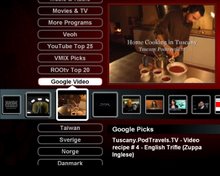
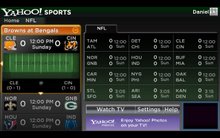
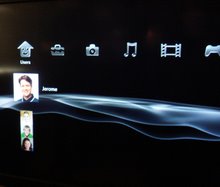
Behind the scene: No widely accepted standard for TV-based Internet video browsing has yet emerged. Clearly, it makes sense to enlist game platforms -- many of which are already connected to the Internet -- to the task of video browsing. But what can be learned from such efforts, regarding the task of enabling Internet browsing for TVs in general?
Solution: After all else has been tried, it seems likely that the forces of ‘lowest cost’, ‘simplest maintenance’, ‘longest useful life’, ‘unrestricted operation’, ‘easiest installation’, ‘minimum development complexity’ and ‘most user features’ will decide what hardware will be used for Internet video browsing at the TV. Active-TV technology is well placed for a decision based on these criteria.
Blockbuster, Vudu, Netflix, TiVo, Apple TV, BuildingB are some of the better known US companies introducing a Set-Top Box (STB) to enable TV access to their Internet-delivered video. There are many lesser-known units, such as the Myka, which bring BitTorrent directly to a box connected to the TV. (The 80 GB-version Myka 80 costs $299 and the 500 GB-version costs $459 -- typical prices for such boxes.) The Apple TV at $229 is said to make little profit. One of the lowest cost media adapter boxes is the D-Link DSM-520, currently selling for $150 at Circuit City.
Why so many boxes? The answer lies in an Internet video broadcaster’s requirement for a box to support a “please use my portal!” strategy. With few exceptions, notably the D-Link DSM-520, these boxes do not support open Internet video browsing. Rather, they are the hardware underpinning for a “walled garden” approach, one that delivers video from the broadcaster’s video library to the TV watcher. The fact that all prior Internet-STB projects with similar business models have failed does not deter repeated optimism for releasing new hardware.
Home users in the US have shown significant reluctance to purchase of any new STB – even the easy-to-use Apple TV. The idea that a user may require one STB per Internet broadcaster seems less than practical. But the business models on trial are driven by a common ambition to be a dominant video supplier or ‘video aggregator’ with a single STB that everyone uses; to be sure, a bit like Apple’s hope that the Apple TV would be the “DVD player for the Internet age”.
Why a STB and not the TV
Closed portal strategies are tied to STB use. This is because integration of Internet browsing directly into TVs has even less appeal because TV buyers are least likely to buy a TV which can only ‘tune’ to a single Internet broadcaster. The latest generation TV system-on-a-chip (SOC) devices with networking support make it technically possible to integrate access to one of today’s portal services, but it is far from clear how the TV’s support firmware can be maintained over a TV’s expected lifespan (6 – 10 years).
A relatively easy and certainly inexpensive way to give a TV access to Internet video is to use a PC-assisted approach, such as active-TV technology. Once such a system is installed at home, it enables the TV to use the latest Web 2.0 methods to freely browse any video broadcaster’s TV-websites. Notwithstanding clear advantages, some new developers still ask me how to get rid of the PC from the system. I am familiar with the methods of achieving this. But they come with significant tradeoffs…
From both the buyer and manufacturer points of view, it is important not to add to the cost of the TV; and equally important not to add software maintenance issues to the TV. It is also important not to limit the useful life of the TV. Also, the TV UI must be sufficiently responsive to keep pace with both the requirements and expectations of users familiar with PC Web 2.0 technology. Moreover, it is important to ensure the TV will be able to browse new Internet video broadcaster sites for years to come. Can all of this be achieved if the PC-assist approach is replaced with new integrated-TV technology? Needless to say, these requirements result in conflicts.
Making the TV smart enough
The non-PC-assist approach is to embed a small browser engine into the TV. This adds some cost and complexity to the TV. The closer to full Web 2.0 support required, the greater the cost and complexity entailed. Additionally, Web 2.0 keeps developing, such that the "chase" never ends. Leaders in developing these small embedded browsers are Oregan Networks and Opera.
Despite the failure of Intel Viiv and AMD LIVE! to gain a significant ‘hold’ of the living room TV, Intel and AMD nevertheless have development projects, Kenmore and Bobcat respectively, to integrate a lower power x86 cores into a TV SOC. This is an old idea, based on the understanding that the necessary support software is more available for x86 than the types of core processors used in, say, TV SOCs from Sigma Designs or ST Micro. Will TV users demand browser support features which leave non-x86 TV chips at a disadvantage? Will even the embedded x86 TV chips be able to satisfy users familiar with the latest Web 2.0 features available on their PCs? The unassisted TV approach likely has some user appeal, but once a TV is connected into the home network, it is very easy for it to be without any competitive disadvantage in terms of video browsing support – the TV just has to ‘wake up’ a networked PC and put its browser on proxy duty.
Most of “ultimate Internet aggregation” STB or digital media adapter projects (including Apple TV) are based on x86 because of the software development problems. So far, potential buyers have indicated the resulting cost increase is too much. Printers, DVD players, hard disc recorders, home wireless networking and other peripheral devices, are best not built into the TV. Maybe Web 2.0 support (if that is what is required) should also not be built into the TV?
TV developers have told me it adds zero hardware cost to include active-TV technology with a new networked TV. The PC is a good peer-to-peer or BitTorrent engine. Torrent support can be relatively complex for direct integration into low-cost TVs. I can see that for some implementations it may be useful to have a TV torrent box such as the Myka, but how many consumers will think it worth more than $300 when there are zero-cost TV-websites with complete torrent download control available? Via these TV-websites and the home network, the TV can ask for PC-assistance in managing the torrent on its behalf.
Reaching a TV audience
Recently announced are the Adobe Media Player and Adobe TV, a video aggregation website which is brand skinable and has advertising support. Adobe says, “In a (technical) nutshell, Adobe Media Player is an RSS aggregator. It consumes standard Media RSS feeds to notify and deliver video content to users.” The RSS mashing part sounds a bit like TVersity or Orb.
While the Adobe Media Player is described as skinable, this does not extend its capabilities to supporting a TV-formatted website, where navigation is via the TV IR remote rather than a desktop mouse. The Adobe Media Payer may be billed as a “cross-platform desktop player”, but it does not appear intended to work with a small browser embedded into a TV or STB – Adobe is not (yet) trying to reach a living room TV audience. Their technology relies on the more extensive PC support features (Web 2.0) to perform its media-oriented UI and RSS aggregation services.
One company trying to bridge the divide and reach a living room audience is the BBC, which has launched Nintendo Wii support for its iPlayer TV catch-up site. Game platforms, such as the Wii and Sony Playstation, support small Internet browsers. This does not allow them to access typical PC-websites such as www.youtube.com, since these sites make use of too much Web 2.0 technology or methods for the small browser to handle (Opera -- in the Wii case). The Wii can access websites which have reduced complexity and are tailored for the Wii – I think Nintendo calls them ‘Internet Channels’.
Maybe this is the future of Internet video browsing – the establishment of some simpler-formatted TV-website standard? However, there is also push to add widget support and social networking to TV-websites which conflicts with broad adoption of simpler standards. In any case, it is easy to see how the task of adding TV-website support into TVs will stretch TV developers – and they typically have less software development skills than game platform developers. In contrast, the active-TV technology approach results in relatively easy engineering tasks.
To dwell on the Wii’s Opera browser a little longer, it does not support the latest Flash video formats or permit access to video utilizing advanced encoding -- a big restriction to extensive browsing hopes. To get the iPlayer to work with the Wii the BBC has to re-encode its video library in the older Flash 7 format. Separately, Scendix Software, known for its development in MCE TV-web applications is also now retargeting some of its applications to the Wii. These carefully crafted projects will bring an audience to the Wii, but it is not clear if it will provide anytime soon a broadly accepted integrated-TV solution to Internet video browsing...
Escaping the PC?
On the BBC blog, I read Anthony Rose’s (head of digital media technology) comments: “Today, most people watch iPlayer programmes on their computer. That's great - you can watch your favourite BBC programmes curled up in bed with your notebook PC”. He goes on to suggest that it is easier to connect the Wii to the TV than a PC to the TV. This of course is true. But the harder task is connecting anything to the home network.
Any video browsing device must be connected to the home network, be it a Nintendo Wii, a networked-STB, or an active-TV technology-enabled TV. This is proving the hardest task for the home installer who typically prefers to use a wireless network rather than a high-speed wired connection. The option to utilize PC-assist is largely irrelevant to the complexities of this installation task. With few exceptions, a person installing a video browsing platform has already connected a PC or notebook computer to their home network – this is the path taken to reach any broadband service. Any network-enabled TV, therefore, is in a position to access personal media stored on other devices within the home network, including a PC. Given the existing reliance on the home network and attached PC, why not also ‘borrow’ the PC’s browser to help the TV with some Web 2.0 video browsing, in a way most likely invisible to the PC user?
In so doing, you can curl up in bed and watch Internet video on your new active-TV enabled TV (rather than the notebook PC), without ever thinking about TV browser upgrades or browser obsolesce. In other words, you can think of the PC-assist approach as similar to attaching a networked printer to the TV. The TV can be used without a ‘printer’, but it is sometimes useful to have it attached (for example, in the case of the attached PC, when Internet video browsing). In other words, the TV works without the networked PC, but when available, the TV can do so much. Best of all, this is accomplished without adding any hardware cost to the networked TV.
The market has not yet decided which approach is the "correct" solution. What portion of the market will use PC-assist? What portion will use an embedded STB browser? Will STB buyers accept ‘walled garden’ portals or demand open Internet browsing? To be sure, the PC-assist approach solves many problems for the TV supplier: it affords the lowest cost, provides for ‘tuning’ to any Internet video broadcast, and ensures the longest TV life – these seem like pretty compelling arguments to me.
Feedback, corrections and comments welcome. Contact me for more information or support with active-TV technology development.
Daniel Mann
Active-TV Technology for iPhone and iPod touch

Navigate YouTube
active-TV technology for PC

Windows PC based home network
Showing posts with label Vudu. Show all posts
Showing posts with label Vudu. Show all posts
Wednesday, April 16, 2008

Wednesday, May 2, 2007
Glasnost TV versus Closed Service TV
Active-TV Ecosystem Developers,
The Issue: Video entertainment upstarts plan on using internet distribution to reach an audience.
Background: Established video broadcasters unlikely to grant free access to the living room TV.
Behind the scene: active-TV technology is capable of granting video distribution to the highly-prized living room audience via a multi-purpose application of the familiar Set-Top Box.
A frequently reported digital convergence analysts, Rob Enderle, implied in a recent article that active-TV technology “is licensed to third parties” by AMD. In fact, AMD does not license any active-TV technology. More correctly, there are several companies offering active-TV technology components. A Set-Top Box (STB) or TV developer is able to select from a variety of suppliers, depending on the particular set of features they wish to enable. In short, there is no single supplier of active-TV technology.
Interestingly, Enderle goes on to say that active-TV technology is “far more complete than Apple TV” and also “AMD has less control over the finished product”. I agree. In fact, since AMD does not license any of the technology, it is difficult to see how it would have any control over other companies’ active-TV based product. Enderle’s statement about active-TV being “complete” likely refers to its neutrality and accessibility when delivering video to the TV.
Active-TV technology tries to bring the openness of the PC-web to TV-web channel viewing. This is described as “painfully complex making this offering more difficult to sell even though it may actually provide one of the better values”. As PC users know, accessing the familiar PC-web can be complex; there are few regulations and imposed standards or quality assurance, but it is open to everyone. Active-TV technology brings these same problems and benefits to TV-web viewing.
Active-TV technology has been described as a step towards glasnost TV via networked-delivered video. It is also a relatively inexpensive approach, as it utilizes an already familiar or available ecosystem of components. However, its openness does not bring any assurances of TV channel quality. In fact it is so open that anyone who can build a blog or a PC-web page can also build their own TV-web channel. The currently closed Apple TV approach is much more restrictive, but Apple can better control the quality of the accessible video materials.
The informed Enderle goes on to described active-TV technology “as the most opposite to Apple’s, harder to use and not as attractive or as well marketed but with massive amounts of content including over-the-air broadcast support and no lock-in to any one content provider or hardware company. Call it maximum flexibility with the possibility that one of the licensing vendors will create an ease-of-use experience and market it so that its technical advantages over Apple TV could result in stronger sales numbers.”
Barriers to reaching the TV
For a long time I have heard the question (particularly in the US), why should the established broadcasters open their network (or associated STBs) to channels from other sources. It is suggested that executives at established channel suppliers, or even the IP-TV start-ups led by MBAs, want control over the video and any associated advertising. They may allow TV-web channels to enrich the content they already offer, but glasnost TV only suits the end-user.
Active-TV technology can equally be applied to closed systems; where video and TV-web channels are only accessible from a service provider’s portal. This principle could equally be applied to PC-web access, but there is no history of filtering URLs to restrict PC-web access. There is a long history of technical and marketing barriers to video entertainment in the living room. Will the freedom of PC-web access finally come to the TV? Or, will the old closed-system rules continue to survive the introduction of active-TV technology and the streaming of internet video to the living room?
My answer is that PC users are going to get a taste for PC-web video from companies like: Vmix, Veoh, UGO, Joost, Brightcove, NarrowStep, Babelgum and many more. Once users have experienced the freedom and variety of unrestricted TV-web channels, it is going to be hard to keep them satisfied with service from only self-serving portals. Users are initially going to experience TV-web channels from low-cost active-TV enabled TVs, Set-Top Boxes and networked game platforms – such as the Sony Playstation 2 - all quite easily purchased in retail stores. There are sufficient numbers of companies who just want to make money from selling an attractive hardware platform. Using active-TV technology immediately makes these boxes increasingly attractive and solves the hardware developer’s problem of demonstrating access to interesting video material.
Other approaches
As to other approaches to bringing internet-based video to the home viewer, a recent NY Times article describes a new IP-TV Box, which uses peer-to-peer (P2P) sharing to deliver video more efficiently. The Vudu box does not support active-TV technology, and works with a video portal service. The expected box cost is close to that of the Apple TV. These systems are closed-service systems, but as Odyssey’s Donatiello quoted in the NY Times states “You have to get the content to the television.” A PC-in-the-living-room approach has been largely rejected by home users. Digital Media Adapter (DMA) alternatives, such as Vudu and Apple TV, have yet to gain widespread acceptance. But the important objective is to deliver video to the living room and as the NY Times states “Steve Jobs at least, understands that”. Closed system boxes do allow the user to view video on the TV, but only video from the box providers approved sources. They don’t allow for widespread competition among TV-web channel suppliers. They are also not typically not multi-function boxes, which leads to cost and consumer acceptance issues.
Beyond a PC audience
YouTube is the video sharing site most talked about. It is famous for its short-format video. Now there are other companies like Joost who seek to make their mark in the same space. A critical differentiator may be support for increasingly longer-format and higher quality video from professional or semi-professional creators. This will put increasing pressure to make the same video available at the TV and not just the PC. The leaders in this new space may be those who first gain user approval at the TV location. There is a need for an open approach which enables TV-web channel developers to compete for viewers at the TV location, without having to first be granted approval from established broadcast suppliers or their STB providers. Active-TV technology provides this significant step towards glastnost TV.
A recent Wired article states the Joost vision as “universal TV, running on a hybrid P2P platform”. They also plan to exploit PC-based P2P video transfer efficiencies; But this is just PC-web, since without access to living room hardware such as Apple TV or an active-TV STB, there is no reaching the TV. To their credit, the Joost founders have successfully applied Skype’s VOIP technology to open-up a difficult to penetrate phone service business. Wired states an old Silicon Valley saying: “don’t bet against the internet”. And anticipates the Joost (Skype) founders might retort with the following corollary, “don’t bet against the Vikings”. Active-TV technology, interestingly, has every bit as strong Viking roots as Joost.
Ecosystem technologies
There are other emerging technologies helping to connect the home PC with the internet and a networked-STB. Orb software enables internet video to be transferred via a PC to the living room TV. Interestingly, it could also be used to send video in the other direction, out from the STB, in very much a Sling box manor. As discussed on the web, this is useful technology; particularly when distributing videos to portable player devices or micro-browser platforms like the Wii. But the TV UI is built by the Orb software. This can enable TV access to YouTube video, but the limitation is that the TV UI is not provided from a remotely access TV-web URL. Orb recently announced support for an active-TV enabled networked STB from Scandinavian based STB developer, Futarque. The Orb software and TV UI are browser based. In the Futarque case, the Orb TV UI runs on the PC and active-TV technology delivers the TV UI to the networked STB location.
Also of interest is TVersity which is currently working on an active-TV formatted TV UI for video streams distributed via RSS feeds. Like, Orb technology, there is also support for video reformatting before sending-on from the PC to the TV. This useful technology allows a user to subscribe to a TV-web RSS feed. At the TV, the latest video supplied by the RSS feed appears in the TV-web channel listings. Again, this is useful technology when forwarding video to a cell phone or PSP, but it does not give complete control over the TV-web channel’s User Interface (UI), which is possible via a TV-web channel directly formatted for active-TV. An interesting combination of these technologies would be a networked accessed active-TV UI which is also continually updated from an RSS video feed.
A low-cost and glasnost solution
There is a struggle by large and small companies alike to gain a significant position in video delivery to the home over the internet. This is fueled by the widespread acceptance of broadband service and home networking. Cost, technical and marketing barriers and partisan interests have focused current efforts on video sharing at the PC via PC-web. Active-TV technology is ideal for now moving the struggle to the living room TV location, or to any TV in the house.
Feedback, corrections and comments welcome.
Daniel Mann
The Issue: Video entertainment upstarts plan on using internet distribution to reach an audience.
Background: Established video broadcasters unlikely to grant free access to the living room TV.
Behind the scene: active-TV technology is capable of granting video distribution to the highly-prized living room audience via a multi-purpose application of the familiar Set-Top Box.
A frequently reported digital convergence analysts, Rob Enderle, implied in a recent article that active-TV technology “is licensed to third parties” by AMD. In fact, AMD does not license any active-TV technology. More correctly, there are several companies offering active-TV technology components. A Set-Top Box (STB) or TV developer is able to select from a variety of suppliers, depending on the particular set of features they wish to enable. In short, there is no single supplier of active-TV technology.
Interestingly, Enderle goes on to say that active-TV technology is “far more complete than Apple TV” and also “AMD has less control over the finished product”. I agree. In fact, since AMD does not license any of the technology, it is difficult to see how it would have any control over other companies’ active-TV based product. Enderle’s statement about active-TV being “complete” likely refers to its neutrality and accessibility when delivering video to the TV.
Active-TV technology tries to bring the openness of the PC-web to TV-web channel viewing. This is described as “painfully complex making this offering more difficult to sell even though it may actually provide one of the better values”. As PC users know, accessing the familiar PC-web can be complex; there are few regulations and imposed standards or quality assurance, but it is open to everyone. Active-TV technology brings these same problems and benefits to TV-web viewing.
Active-TV technology has been described as a step towards glasnost TV via networked-delivered video. It is also a relatively inexpensive approach, as it utilizes an already familiar or available ecosystem of components. However, its openness does not bring any assurances of TV channel quality. In fact it is so open that anyone who can build a blog or a PC-web page can also build their own TV-web channel. The currently closed Apple TV approach is much more restrictive, but Apple can better control the quality of the accessible video materials.
The informed Enderle goes on to described active-TV technology “as the most opposite to Apple’s, harder to use and not as attractive or as well marketed but with massive amounts of content including over-the-air broadcast support and no lock-in to any one content provider or hardware company. Call it maximum flexibility with the possibility that one of the licensing vendors will create an ease-of-use experience and market it so that its technical advantages over Apple TV could result in stronger sales numbers.”
Barriers to reaching the TV
For a long time I have heard the question (particularly in the US), why should the established broadcasters open their network (or associated STBs) to channels from other sources. It is suggested that executives at established channel suppliers, or even the IP-TV start-ups led by MBAs, want control over the video and any associated advertising. They may allow TV-web channels to enrich the content they already offer, but glasnost TV only suits the end-user.
Active-TV technology can equally be applied to closed systems; where video and TV-web channels are only accessible from a service provider’s portal. This principle could equally be applied to PC-web access, but there is no history of filtering URLs to restrict PC-web access. There is a long history of technical and marketing barriers to video entertainment in the living room. Will the freedom of PC-web access finally come to the TV? Or, will the old closed-system rules continue to survive the introduction of active-TV technology and the streaming of internet video to the living room?
My answer is that PC users are going to get a taste for PC-web video from companies like: Vmix, Veoh, UGO, Joost, Brightcove, NarrowStep, Babelgum and many more. Once users have experienced the freedom and variety of unrestricted TV-web channels, it is going to be hard to keep them satisfied with service from only self-serving portals. Users are initially going to experience TV-web channels from low-cost active-TV enabled TVs, Set-Top Boxes and networked game platforms – such as the Sony Playstation 2 - all quite easily purchased in retail stores. There are sufficient numbers of companies who just want to make money from selling an attractive hardware platform. Using active-TV technology immediately makes these boxes increasingly attractive and solves the hardware developer’s problem of demonstrating access to interesting video material.
Other approaches
As to other approaches to bringing internet-based video to the home viewer, a recent NY Times article describes a new IP-TV Box, which uses peer-to-peer (P2P) sharing to deliver video more efficiently. The Vudu box does not support active-TV technology, and works with a video portal service. The expected box cost is close to that of the Apple TV. These systems are closed-service systems, but as Odyssey’s Donatiello quoted in the NY Times states “You have to get the content to the television.” A PC-in-the-living-room approach has been largely rejected by home users. Digital Media Adapter (DMA) alternatives, such as Vudu and Apple TV, have yet to gain widespread acceptance. But the important objective is to deliver video to the living room and as the NY Times states “Steve Jobs at least, understands that”. Closed system boxes do allow the user to view video on the TV, but only video from the box providers approved sources. They don’t allow for widespread competition among TV-web channel suppliers. They are also not typically not multi-function boxes, which leads to cost and consumer acceptance issues.
Beyond a PC audience
YouTube is the video sharing site most talked about. It is famous for its short-format video. Now there are other companies like Joost who seek to make their mark in the same space. A critical differentiator may be support for increasingly longer-format and higher quality video from professional or semi-professional creators. This will put increasing pressure to make the same video available at the TV and not just the PC. The leaders in this new space may be those who first gain user approval at the TV location. There is a need for an open approach which enables TV-web channel developers to compete for viewers at the TV location, without having to first be granted approval from established broadcast suppliers or their STB providers. Active-TV technology provides this significant step towards glastnost TV.
A recent Wired article states the Joost vision as “universal TV, running on a hybrid P2P platform”. They also plan to exploit PC-based P2P video transfer efficiencies; But this is just PC-web, since without access to living room hardware such as Apple TV or an active-TV STB, there is no reaching the TV. To their credit, the Joost founders have successfully applied Skype’s VOIP technology to open-up a difficult to penetrate phone service business. Wired states an old Silicon Valley saying: “don’t bet against the internet”. And anticipates the Joost (Skype) founders might retort with the following corollary, “don’t bet against the Vikings”. Active-TV technology, interestingly, has every bit as strong Viking roots as Joost.
Ecosystem technologies
There are other emerging technologies helping to connect the home PC with the internet and a networked-STB. Orb software enables internet video to be transferred via a PC to the living room TV. Interestingly, it could also be used to send video in the other direction, out from the STB, in very much a Sling box manor. As discussed on the web, this is useful technology; particularly when distributing videos to portable player devices or micro-browser platforms like the Wii. But the TV UI is built by the Orb software. This can enable TV access to YouTube video, but the limitation is that the TV UI is not provided from a remotely access TV-web URL. Orb recently announced support for an active-TV enabled networked STB from Scandinavian based STB developer, Futarque. The Orb software and TV UI are browser based. In the Futarque case, the Orb TV UI runs on the PC and active-TV technology delivers the TV UI to the networked STB location.
Also of interest is TVersity which is currently working on an active-TV formatted TV UI for video streams distributed via RSS feeds. Like, Orb technology, there is also support for video reformatting before sending-on from the PC to the TV. This useful technology allows a user to subscribe to a TV-web RSS feed. At the TV, the latest video supplied by the RSS feed appears in the TV-web channel listings. Again, this is useful technology when forwarding video to a cell phone or PSP, but it does not give complete control over the TV-web channel’s User Interface (UI), which is possible via a TV-web channel directly formatted for active-TV. An interesting combination of these technologies would be a networked accessed active-TV UI which is also continually updated from an RSS video feed.
A low-cost and glasnost solution
There is a struggle by large and small companies alike to gain a significant position in video delivery to the home over the internet. This is fueled by the widespread acceptance of broadband service and home networking. Cost, technical and marketing barriers and partisan interests have focused current efforts on video sharing at the PC via PC-web. Active-TV technology is ideal for now moving the struggle to the living room TV location, or to any TV in the house.
Feedback, corrections and comments welcome.
Daniel Mann
Subscribe to:
Posts (Atom)