Active-TV Ecosystem Developers,
The Issue: How many TV-web channels are available for TV viewing? What standard do they use?
Background: The freedom associated with a PC’s access to PC-web via the internet, has changed our lives. This same freedom will enable TV-web channel developers to bring TV-web to the living room TV
Behind the scene: Anyone can build a TV-web channel, and many major companies already have. With active-TV technology, the growth in TV-web channel development is accelerated, given that it brings to TV-web the same freedoms associated with PC-web access.
I don’t know how many PC-web sites exist, or how many new ones are added to the web every day. Similarly, I don’t know how many TV-web channels [i.e. websites formatted for access at the TV] exist. But like the early days of PC-web, while the number may be relatively low, it is growing rapidly.
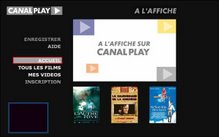
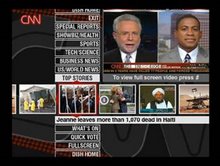
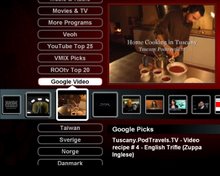
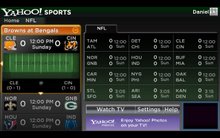
I have attached below a list of known TV-web channels or sites. However, such a list quickly falls out of date. I did not include sites from the USA which would have included some interesting examples, such as access to YouTube, Google Video, Veoh, Vmix and more. Also not included are sites from Japan, Korea or Taiwan, whose listings’ would have required additional font support.
As previously described, there are many ways to build or lay out TV-web. When Microsoft introduced the Media Center Edition (MCE) PC, it offered a suggested set of guidelines to show how TV-web, intended for MCE presentation, should look. Although there may be practical reasons for following these guidelines, a TV-web developer can nevertheless build anything they see fit, using any web publishing tools available.
The MCE PC has a means of adding “more programs” to the TV-web channel listings. The name “more-programs” may not be ideal; it is likely left over from the time when TV-web was also known as media applications. Any TV-web channel can be added under the “more programs” channel listings. However, Microsoft selected certain TV-web sites to reside at the top of the TV menu and called them “spotlights”. TV-web channels added to the TV menu via use of “more programs” appear lower down on the TV menu. With the introduction of Vista, Microsoft has instead been calling TV-web channels “on-line media,” rather than MCE “more programs” or “spotlights”.
Like PC-web, once a TV-web channel is offered on the internet, anyone with a capable browser can access it. Using active-TV technology enables any Windows PC to access the site on behalf of a networked TV or Set-Top Box -- there is no need for an MCE PC. A number of TV-web channel suppliers are trying to restrict access to their site to certain geographical locations – such as, for example, the BBC limiting access to the UK. This is generally accomplished via IP address filtering: If the viewer’s IP address is not determined to be located in the correct geographical region, the request for access to the TV-web channel is not granted by the server.
Because Adobe Flash Video (FLV) is very popular with PC-web sites supporting video sharing, it is increasingly used with TV-web channels. Use of FLV was not covered in the MCE TV-web development guidelines. Current active-TV technology supports the distribution of TV-web channels using FLV to devices such as networked TVs and networked STBs located around the home. However, other devices with similar technology, including Media Center Extenders, do not support the use of FLV video. Where these Extenders are similar to active-TV technology is in their support for Windows Media Video (WMV) and MPEG2 video.
Feedback, corrections and comments welcome.
Daniel Mann
link to list of non-US TV-web channels
Active-TV Technology for iPhone and iPod touch

Navigate YouTube
active-TV technology for PC

Windows PC based home network
Showing posts with label WinHTML. Show all posts
Showing posts with label WinHTML. Show all posts
Saturday, June 16, 2007

Wednesday, August 16, 2006
Should TV-web be formated with HTML, MCML, WinFX or CE-HTML ?
Active-TV Ecosystem Developers,
The Wall Street Journal [WSJ] reports that the "TV Portal Service Corp" has been formed by a Japanese consortium to develop a common standard for TV-web. A specification is expected in spring 2007. It is likely that the standard depends on a reduced-sized browser-engine, or micro-browser. The browser would support a reduced HTML format; know as CE-HTML (Consumer Equipment), or sometimes c.HTML (Compact HTML), or more recently Web-4-CE.
- [WSJ] Sony, Panasonic, Sharp, Toshiba and Hitachi are understood to be developing a joint Japanese standard for internet-connected televisions to address competition from the computer industry for broadband video services.
[WSJ] The Japanese consumer electronics companies aim to develop broadband-enabled televisions that can download and display videos from the internet without the need for a separate set-top box (STB) or computer.
The WSJ suggest that MHP (Java based) was intended for just such a standard. This is somewhat incorrect; Yes, MHP specified a run-time standard for applications; But, these applications were initially intended for broadcast distribution and not IP distribution.
- [WSJ] The MHP or Multimedia Home Platform specification, the basis for the OCAP specification formally adopted by the American cable industry, was intended to provide just such a standard, but its adoption has been frustrated by wrangling over technology and licensing.
I do agree with the WSJ that HMP and its follow-on OCAP have not demonstrated adequate technical or marketing success. Consequently, MHP looks an every weaker competitor to IP application distribution, supported by a STB micro-browser conforming to a CE-HTML standard.
Further comments from the Sydney Herald:
- [SH] The new televisions will use Linux operating systems instead of Microsoft Windows, it added. That feature is aimed at cutting the time needed to boot up and reducing the risk of virus infection. Together, the five companies expect to sell 10 million to 20 million units by Japan's 2011 changeover to terrestrial digital broadcasting, according to the report.
What is the suggested: “competition from the computer industry” ?
Web pages are formatted according to HTML and various extensions. It has always been possible to format a web page for display on a TV, but mostly this was rare and HTML was used for PC-web.
With the introduction of the Media Center Edition PC (MCE), it was made easier to put the PC’s familiar Internet Explorer browser to work in support of TV formatted websites - which Microsoft prefers to call “spotlights”. The MCE software includes some extra browser “helper routines”. These helper routines are not included with the Windows XP browser, hence making access to TV spotlights only possible from an MCE PC.
PC-web and TV-web developers are free to use any tools they like, or any style they prefer, in the development of a PC-web page or TV-web ‘channel’. However, the introduction of the MCE PC has encouraged many from both inside and outside the PC industry, to start developing TV-web using an HTML standard.
The PC browser and its extensions and helpers are too complex to be easily supported on a simple and inexpensive STB. Consequently, a PC is required at the TV location, or the PC must project its browser image over the network to the STB connected to the PC. This second approach conforms to the Extended-PC principle. The Japanese consortium described above, is likely an effort to remove PC browser dependence; by reducing the HTML standard to a simpler CE-HTML standard which can be supported by a standalone STB.
The Extended-PC approach is utilized by MCE, Intel ViiV (NMPR portion) and active-TV. These all support TV-web using HTML. However, there are differences in how the browser image is projected to the TV’s STB. This leads to what is called an Extended-PC ecosystem; Where a client STB (or other type of client, such as an Xbox) is limited to operating within only one ecosystem.
Active-TV collaborators provide alternative helper routines, resulting in TV-web sites accessibility from any Windows XP PC. An active-TV enabled STB displays TV-web channels after they have been first formatted by a browser-engine of a networked PC.
With the introduction of Windows Vista, Microsoft plans to add two more standards for formatting TV-web. They are WinFX browser applications and MCML (Media Center Markup Language). Microsoft has indicated the 2 new TV-web standards will only be supported by the new Vista PC. The current MCE will support TV-web HTML. Without active-TV support, Windows XP does not directly support TV-web HTML, MCML or WinFX browser apps.
From the Microsoft SDK (remember there are other companies which offer an HTML SDK):
WinFX Browser Applications (XBAP) can make direct calls on the FX graphics drawing routines. This enables a very high standard of TV-web graphics, but requires considerable more underlying hardware support than is generally available with a STB.
In the future TV-web application developers will have a lot of standards to choice from. Use of HTML likely offers a more advanced TV UI than CE-HTML, but less ‘rich’ than MCML or WinFX. Possibly more significant will be the number of viewers reachable as a result of selecting a standard. It will be some time before Vista or CE-HTML platforms are adopted at TV locations in sufficient numbers to offer more viewers than HTML. There is also no conclusive analysis indicating TV viewers will demand a ‘rich’ TV-web over something more ‘passive’ but appreciated.
Feedback, corrections and comments welcome.
More at:
http://blog.mediacentersandbox.com/PermaLink,guid,817c2b05-2a9e-47ac-80c9-1c4db5b26c18.aspx
http://blog.mediacentersandbox.com/default,month,2006-03.aspxwww.wsj.com
www.wsj.com
http://www.smh.com.au/news/World/Companies-to-develop-internet-TVs/2006/08/03/1154198247668.html
Subscribe to:
Posts (Atom)