Active-TV ecosystem developers,
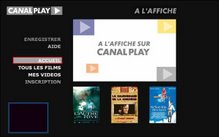
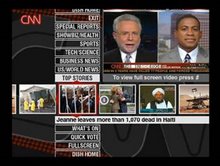
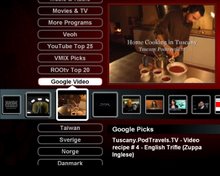
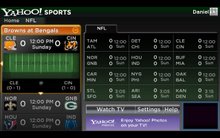
Active-TV uses PC-resident TV-web developed by www.scendix.com. Additionally, Scendix supply broad-band accessed TV-web, such as: mcePhone (Skype-for-TV), the popular mceWeather and mceAuction. This last one, enables access to eBay auction via the TV. McePhone supports use of PC-based Skype from the living room TV.
Scendix’s Christioph Buenger was interviewed at the Las Vegas eBay Developer Conference. The interviewer uses Microsoft-speak and talks about “MCE solutions”; These “solutions” are TV-web and active-TV makes them available on more than just the Media Center Edition PC – specifically, the active-TV enabled hybrid-STB.
Please see a video of the interview at http://www.on10.net/Blogs/TheShow/4960/. Christoph demonstrates mceAuction but also talks about his other broadband TV-web applications.
Feedback, corrections and comments welcome.
Active-TV Technology for iPhone and iPod touch

Navigate YouTube
active-TV technology for PC

Windows PC based home network
Monday, August 21, 2006

Wednesday, August 16, 2006
Should TV-web be formated with HTML, MCML, WinFX or CE-HTML ?
Active-TV Ecosystem Developers,
The Wall Street Journal [WSJ] reports that the "TV Portal Service Corp" has been formed by a Japanese consortium to develop a common standard for TV-web. A specification is expected in spring 2007. It is likely that the standard depends on a reduced-sized browser-engine, or micro-browser. The browser would support a reduced HTML format; know as CE-HTML (Consumer Equipment), or sometimes c.HTML (Compact HTML), or more recently Web-4-CE.
- [WSJ] Sony, Panasonic, Sharp, Toshiba and Hitachi are understood to be developing a joint Japanese standard for internet-connected televisions to address competition from the computer industry for broadband video services.
[WSJ] The Japanese consumer electronics companies aim to develop broadband-enabled televisions that can download and display videos from the internet without the need for a separate set-top box (STB) or computer.
The WSJ suggest that MHP (Java based) was intended for just such a standard. This is somewhat incorrect; Yes, MHP specified a run-time standard for applications; But, these applications were initially intended for broadcast distribution and not IP distribution.
- [WSJ] The MHP or Multimedia Home Platform specification, the basis for the OCAP specification formally adopted by the American cable industry, was intended to provide just such a standard, but its adoption has been frustrated by wrangling over technology and licensing.
I do agree with the WSJ that HMP and its follow-on OCAP have not demonstrated adequate technical or marketing success. Consequently, MHP looks an every weaker competitor to IP application distribution, supported by a STB micro-browser conforming to a CE-HTML standard.
Further comments from the Sydney Herald:
- [SH] The new televisions will use Linux operating systems instead of Microsoft Windows, it added. That feature is aimed at cutting the time needed to boot up and reducing the risk of virus infection. Together, the five companies expect to sell 10 million to 20 million units by Japan's 2011 changeover to terrestrial digital broadcasting, according to the report.
What is the suggested: “competition from the computer industry” ?
Web pages are formatted according to HTML and various extensions. It has always been possible to format a web page for display on a TV, but mostly this was rare and HTML was used for PC-web.
With the introduction of the Media Center Edition PC (MCE), it was made easier to put the PC’s familiar Internet Explorer browser to work in support of TV formatted websites - which Microsoft prefers to call “spotlights”. The MCE software includes some extra browser “helper routines”. These helper routines are not included with the Windows XP browser, hence making access to TV spotlights only possible from an MCE PC.
PC-web and TV-web developers are free to use any tools they like, or any style they prefer, in the development of a PC-web page or TV-web ‘channel’. However, the introduction of the MCE PC has encouraged many from both inside and outside the PC industry, to start developing TV-web using an HTML standard.
The PC browser and its extensions and helpers are too complex to be easily supported on a simple and inexpensive STB. Consequently, a PC is required at the TV location, or the PC must project its browser image over the network to the STB connected to the PC. This second approach conforms to the Extended-PC principle. The Japanese consortium described above, is likely an effort to remove PC browser dependence; by reducing the HTML standard to a simpler CE-HTML standard which can be supported by a standalone STB.
The Extended-PC approach is utilized by MCE, Intel ViiV (NMPR portion) and active-TV. These all support TV-web using HTML. However, there are differences in how the browser image is projected to the TV’s STB. This leads to what is called an Extended-PC ecosystem; Where a client STB (or other type of client, such as an Xbox) is limited to operating within only one ecosystem.
Active-TV collaborators provide alternative helper routines, resulting in TV-web sites accessibility from any Windows XP PC. An active-TV enabled STB displays TV-web channels after they have been first formatted by a browser-engine of a networked PC.
With the introduction of Windows Vista, Microsoft plans to add two more standards for formatting TV-web. They are WinFX browser applications and MCML (Media Center Markup Language). Microsoft has indicated the 2 new TV-web standards will only be supported by the new Vista PC. The current MCE will support TV-web HTML. Without active-TV support, Windows XP does not directly support TV-web HTML, MCML or WinFX browser apps.
From the Microsoft SDK (remember there are other companies which offer an HTML SDK):
WinFX Browser Applications (XBAP) can make direct calls on the FX graphics drawing routines. This enables a very high standard of TV-web graphics, but requires considerable more underlying hardware support than is generally available with a STB.
In the future TV-web application developers will have a lot of standards to choice from. Use of HTML likely offers a more advanced TV UI than CE-HTML, but less ‘rich’ than MCML or WinFX. Possibly more significant will be the number of viewers reachable as a result of selecting a standard. It will be some time before Vista or CE-HTML platforms are adopted at TV locations in sufficient numbers to offer more viewers than HTML. There is also no conclusive analysis indicating TV viewers will demand a ‘rich’ TV-web over something more ‘passive’ but appreciated.
Feedback, corrections and comments welcome.
More at:
http://blog.mediacentersandbox.com/PermaLink,guid,817c2b05-2a9e-47ac-80c9-1c4db5b26c18.aspx
http://blog.mediacentersandbox.com/default,month,2006-03.aspxwww.wsj.com
www.wsj.com
http://www.smh.com.au/news/World/Companies-to-develop-internet-TVs/2006/08/03/1154198247668.html
Wednesday, July 26, 2006
Building TV viewership
Active-TV Ecosystem Developers,
Using the cell phone to interact with a broadcast TV show is becoming increasingly familiar to TV audiences. There has been a lot of discussion about its use in building viewership and loyalty. The linked Wall Street Journal article covers several of these points.
The PC-web is also used in support of broadcast programming. But, unlike the STB, the PC is not normally used to access a broadcast show. PC-web material is accessed out with the broadcast time-slot and from a PC rather than living room TV. The article states “the cell phone is the best way to make television interactive because you can participate without getting out of the couch”.
With the adoption of the hybrid-STB and hybrid-TV, the IP path is likely to replace the cell phone as the technology supporting viewer “involvement”. The hybrid-STB enables TV-web pages in support of a broadcast show to be accessed from the living room. Also of interest is overlay TV-web (semi-transparent TV-formatted web pages overplayed on broadcast scenes); they will provide content creators, broadcasters and promoters with a much more productive method to build viewership and audience loyalty.
One challenge may be to keep the TV “experience” a mostly passive one while adding IP supported features. However, viewer behaviour is not easily predicted. Reality TV producers tell me there is a passive audience that wants to watch the response of a smaller number of interactive audience – it becomes part of the show, but remains passive for most.
Feedback, corrections and comments welcome.
Friday, May 12, 2006
Google thinks hybrid-STB and post linear-TV
Active-TV ecosystem developers,
Much of the converge market dreamers have focused on premium video content distribution via IPTV. What might be called a type or pear-pressure may have driven participation in a frenzy of legal, content protection and revenue sharing issues. This may have contributed to the downfall of the UK BT entertainment chief after his statement: “It’s not about the content”; He was replaced with a former Universal Studios executive with plans for a BT [UK telco] television service.
Over at the BBC they are no less ambitious, but certainly more restrained about the imminent dominance of IPTV – BBC director: “I’m not a swivel-eyed looney that sees the end of conventional television overnight”.
IMS Research estimates that by the end of 2005, there were over 9 million integrated DVRs shipped worldwide. Growth in the DVR market is expected to come primarily from operator deployments [MSOs]. By the end of 2010, a forecast 136 million TV households worldwide will employ an integrated DVR box.
The ability of DVR to erode TV advertising revenue is not part of the familiar convergence frenzy. Advertising erosion is in a denial stage, as there is no agreement on an alternative; and denial is seen as better than panic. Interesting, the erosion of linear-TV advertising is likely to be most significant in the US market where the uptake of IPTV is likely slowest.
As more considered views of convergence appear, Google wants to hire a “Product Manager for Interactive TV”. They will “identify key market trends that are shaping user behavior when watching Television”. Google go on to say: “intersection of internet and Television technologies, video-on-demand, DVR and emergence of next generation set-top-boxes with IP connectivity”.
Of interest is Google’s mention of the STB with IP connectivity – also know as the hybrid-STB. It is clear that hybrid-STB adoption is a significant trend. With Google’s increased attention to the hybrid-STB, maybe Intel will direct more effort to a ViiV hybrid-STB rather than ViiV DMA. AMD and active-TV partners appear ahead of both in terms of an Extended-PC and hybrid-STB ecosystem development.
The 10-foot role of the Extended-PC is to run media application software – then project the UI over the home network to the TV. With the inclusion of advanced video CODEC support in the STB SOC, the hybrid-STB can directly support IP-TV viewing. A PC in the living room is not the only way to view IP-TV. The Extended-PC may have more of a role in supporting new forms of TV advertising. Active-TV developments have been pushing relevant developments. They already have projects, plans and collaborators for the support of new forms of advertising supported by an active-TV ecosystem
Google hopes to identify “search and advertising technology”, for which they can no doubt be a key supplier. Search engine usage is a widely accepted 2-foot PC task. This has enabled Google to develop a 2-foot advertising business. It is not clear that TV watchers want a 10-foot search engine; after all, the TV is an entertainment device, not an information device. Search engine usage may not give Google the ‘TV exposure’ and hence an advertising role. Maybe the advertising support role falls more naturally to the IPTV aggregator; Or to those able to synchronise media applications to IPTV or broadcast TV service.
Comments, corrections and feedback welcome
Much of the converge market dreamers have focused on premium video content distribution via IPTV. What might be called a type or pear-pressure may have driven participation in a frenzy of legal, content protection and revenue sharing issues. This may have contributed to the downfall of the UK BT entertainment chief after his statement: “It’s not about the content”; He was replaced with a former Universal Studios executive with plans for a BT [UK telco] television service.
Over at the BBC they are no less ambitious, but certainly more restrained about the imminent dominance of IPTV – BBC director: “I’m not a swivel-eyed looney that sees the end of conventional television overnight”.
IMS Research estimates that by the end of 2005, there were over 9 million integrated DVRs shipped worldwide. Growth in the DVR market is expected to come primarily from operator deployments [MSOs]. By the end of 2010, a forecast 136 million TV households worldwide will employ an integrated DVR box.
The ability of DVR to erode TV advertising revenue is not part of the familiar convergence frenzy. Advertising erosion is in a denial stage, as there is no agreement on an alternative; and denial is seen as better than panic. Interesting, the erosion of linear-TV advertising is likely to be most significant in the US market where the uptake of IPTV is likely slowest.
As more considered views of convergence appear, Google wants to hire a “Product Manager for Interactive TV”. They will “identify key market trends that are shaping user behavior when watching Television”. Google go on to say: “intersection of internet and Television technologies, video-on-demand, DVR and emergence of next generation set-top-boxes with IP connectivity”.
Of interest is Google’s mention of the STB with IP connectivity – also know as the hybrid-STB. It is clear that hybrid-STB adoption is a significant trend. With Google’s increased attention to the hybrid-STB, maybe Intel will direct more effort to a ViiV hybrid-STB rather than ViiV DMA. AMD and active-TV partners appear ahead of both in terms of an Extended-PC and hybrid-STB ecosystem development.
The 10-foot role of the Extended-PC is to run media application software – then project the UI over the home network to the TV. With the inclusion of advanced video CODEC support in the STB SOC, the hybrid-STB can directly support IP-TV viewing. A PC in the living room is not the only way to view IP-TV. The Extended-PC may have more of a role in supporting new forms of TV advertising. Active-TV developments have been pushing relevant developments. They already have projects, plans and collaborators for the support of new forms of advertising supported by an active-TV ecosystem
Google hopes to identify “search and advertising technology”, for which they can no doubt be a key supplier. Search engine usage is a widely accepted 2-foot PC task. This has enabled Google to develop a 2-foot advertising business. It is not clear that TV watchers want a 10-foot search engine; after all, the TV is an entertainment device, not an information device. Search engine usage may not give Google the ‘TV exposure’ and hence an advertising role. Maybe the advertising support role falls more naturally to the IPTV aggregator; Or to those able to synchronise media applications to IPTV or broadcast TV service.
Comments, corrections and feedback welcome
Tuesday, May 9, 2006
Advertising revenue moving to non-linear TV
Active-TV ecosystem developers,
Grocery brand advertising budgets are not the size of an auto maker, but the announcement below indicates that smaller-scale advertisers are also moving away from traditional linear-TV advertising methods.
Increasingly, brand promoters are stating non-linear advertising better supports a lifestyle-messaging approach. A mini-DAL (Dedicated Advertiser Location) allows the viewer to depart from normal broadcast viewing and enter a dedicated advertising content area. Platforms such as BSkyB’s Sky-Active interactive TV support this.
“Viewers 'jump' to the DAL or Mini-DAL from a broadcast commercial through an interactive button or from a banner in an interactive service.”
These kinds of UI operation are easily supported by an active-TV hybrid-STB. The DAL takes the form of an IP-TV channel; the “jump” is taken from an overlay media application presenting a banner (or the like) over the broadcast image.
If you want to see DAL advertising in action, take a look at http://www.idigitalsales.co.uk/html_content/images/mpegs/bmwseries1.mpg The video is a capture of a TV screen; first shown is the linear BMW advertisement, then the video shows the jump-banner and the DAL channel -- Bit of a ‘change’ for many US TV viewers.
The active-TV hybrid-STB and extended-Notebook are well placed to support these new forms of advertising.
Feedback, corrections and comments welcome.
more at http://blog.itvt.com/my_weblog/2006/05/uks_bernard_mat.html
Grocery brand advertising budgets are not the size of an auto maker, but the announcement below indicates that smaller-scale advertisers are also moving away from traditional linear-TV advertising methods.
Increasingly, brand promoters are stating non-linear advertising better supports a lifestyle-messaging approach. A mini-DAL (Dedicated Advertiser Location) allows the viewer to depart from normal broadcast viewing and enter a dedicated advertising content area. Platforms such as BSkyB’s Sky-Active interactive TV support this.
“Viewers 'jump' to the DAL or Mini-DAL from a broadcast commercial through an interactive button or from a banner in an interactive service.”
These kinds of UI operation are easily supported by an active-TV hybrid-STB. The DAL takes the form of an IP-TV channel; the “jump” is taken from an overlay media application presenting a banner (or the like) over the broadcast image.
If you want to see DAL advertising in action, take a look at http://www.idigitalsales.co.uk/html_content/images/mpegs/bmwseries1.mpg The video is a capture of a TV screen; first shown is the linear BMW advertisement, then the video shows the jump-banner and the DAL channel -- Bit of a ‘change’ for many US TV viewers.
The active-TV hybrid-STB and extended-Notebook are well placed to support these new forms of advertising.
Feedback, corrections and comments welcome.
more at http://blog.itvt.com/my_weblog/2006/05/uks_bernard_mat.html
Wednesday, April 26, 2006
TV-World-Wide interviews at AMD's NAB booth
Active-TV ecosystem developers,
AMD announced collaboration with Red Bee (formerly BBC Broadcast); they are a content creator and distributor. They are adding support for Media Center Edition (MCE) formatted access to content over broadband to the home.
At NAB Red Bee are demonstrating access to IPTV service via an active-TV enabled hybrid-STB and Extended-Notebook ecosystem. MediaMall provides the thin-client support software allowing the MCE application (spotlight) to the ‘disrtibuted' from the Extended-PC to the STB thin-client.
TVWorldwide came to the AMD booth and interviewed Red Bee’s Chris Howe (CTO) and MediaMall’s Jeff Lawrence (President). See the interviews at the links below:
MediaMall interview: http://tvworldwide.com/events/nab/nab2006/default.cfm?id=6771&type=wmhigh&test=0
Red Bee interview: http://tvworldwide.com/events/nab/nab2006/default.cfm?id=6770&type=wmhigh&test=0
More at http://www.redbeemedia.com/
Feedback, corrections and comments welcome.
AMD announced collaboration with Red Bee (formerly BBC Broadcast); they are a content creator and distributor. They are adding support for Media Center Edition (MCE) formatted access to content over broadband to the home.
At NAB Red Bee are demonstrating access to IPTV service via an active-TV enabled hybrid-STB and Extended-Notebook ecosystem. MediaMall provides the thin-client support software allowing the MCE application (spotlight) to the ‘disrtibuted' from the Extended-PC to the STB thin-client.
TVWorldwide came to the AMD booth and interviewed Red Bee’s Chris Howe (CTO) and MediaMall’s Jeff Lawrence (President). See the interviews at the links below:
MediaMall interview: http://tvworldwide.com/events/nab/nab2006/default.cfm?id=6771&type=wmhigh&test=0
Red Bee interview: http://tvworldwide.com/events/nab/nab2006/default.cfm?id=6770&type=wmhigh&test=0
More at http://www.redbeemedia.com/
Feedback, corrections and comments welcome.
Subscribe to:
Posts (Atom)